¶ Recent Updates2026
|
|
¶ Background |
|
|
In order for a chemical substance to be manufactured or imported into Japan, it must be listed on the CSCL inventory, also known as the ENCS inventory, as well as on the ISHL inventory . When a chemical substance is not listed on the CSCL (or ENCS) inventory, the substance will be considered a new chemical substance under Japan's Chemical Substances Control Law (CSCL), and notification must be submitted to the Ministry of Economy, Trade and Industry (METI), the Ministry of Health, Labour and Welfare (MHLW), and the Ministry of Environment (MOE). When a chemical substance is not listed on the ISHL inventory, the substance will be considered a new chemical substance under Japan's Industrial Safety and Health Law (ISHL), and notification must be submitted to the Ministry of Health, Labour, and Welfare. Japan's Chemical Substances Control Law (CSCL) regulates industrial chemicals in general and restricts manufacture and import of hazardous chemicals. Hazardous chemicals are classified into Class 1 Specified Chemical Substances and Class 2 Specified Chemical Substances. The CSCL prioritizes the risk evaluation of selected chemicals (Priority Assessment Chemical Substances), and the chemical industry, i.e., manufacturers and importers of such chemicals in Japan, are required to submit new data or findings about the safety of their chemicals, to the Ministry of Economy, Trade and Industry. All existing chemicals are subject to the CSCL's annual reporting requirement. Each manufacturer or importer of chemical substances is required to submit information about annual tonnage, chemical identity, and use of each chemical they manufactured or imported in an amount of 1 metric ton or more at the end of every year. Japan's Industrial Safety and Health Law regulates hazardous chemicals in the workplace. Chemical substances that are harmful to the health of workers are subject to Hazard Communication requirements. Chemical substances that can cause acute injuries to humans due to their acute toxicity and/or corrosivity are regulated by Japan's Poisonous and Deleterious Substances Control Law. Production, import, distribution, and use of chemical substances that are designated as Poisonous, Deleterious, or Specified Poisonous substance require Registration through the Ministry of Health, Labour and Welfare or a health department of the jurisdiction where the business is located. Poisonous and Deleterious Substances also have Hazard Communication requirements. In Japan there are three separate laws requiring safety data sheets (SDSs) and labeling for the substances each law considers hazardous: Industrial safety and Health Law (ISHL), Poisonous and Deleterious Substances Control Law (PDSCL), and Act on Confirmation, etc. of Release Amounts of Specific Chemical Substances in the Environment and Promotion of Improvements to the Management Thereof (PRTR Law). Japan adopted the Globally Harmonized System of Classification and Labeling of Chemicals (GHS) in 2006. GHS compliant SDSs and labels are currently mandatory for chemical substances regulated by ISHL and PRTR Law. The GHS is still optional for chemical substances regulated by the Poisonous and Deleterious Substances Control Law (PDCSL). The Japanese government carries out GHS classification for substances regulated under ISHL, PDSCL, and PRTR Law. To date, NITE has published GHS classification results for a total of 3,560 substances. It is intended to assist chemical suppliers with preparation of GHS compliant SDSs and labels; however the use of the classification is not mandatory. To facilitate GHS implementation, Japan established two key Japanese industrial Standards (JIS). JIS Z 7253 specifies requirements for SDSs and labeling elements, while JIS Z 7252 provides the guidance on the classification of chemical substances and mixtures according to the GHS criteria. The previous editions, JIS Z 7252:2019 and JIS Z 7253:2019, were aligned with the 6th revised edition of the UN GHS (Purple Book). The current editions, JIS Z 7252:2025 and JIS Z 7253:2025, were published on December 25, 2025, and align Japan's GHS standards with the 9th revised edition of the UN GHS. Japan's national legislation is characterized by a hierarchical structure composed of, in order of precedence, Constitution, Act/Law, Cabinet Order, Ordinance of the Ministry, Notification, and Notice. 
|
|
¶ Inventories |
|
|
Chemical substances must be listed on two chemical inventories in Japan in order to be manufactured or imported for a commercial purpose. If the substance is not found on either inventory, or if the substance is on only one of the inventories, a new chemical substance notification must be submitted to the appropriate ministry or ministries. There are two separate notification systems concerning new chemical substances. One system is laid out by the Act Concerning Evaluation, Management of Chemical Manufactures and etc., also known as Japan's Chemical Substances Control Law (CSCL). The Act controls the manufacture and import of industrial chemicals and evaluates the environmental risk of the chemicals in Japan. Another system is implemented under Japan's Industrial Safety and Health Law (ISHL). This law focuses on workplace safety and regulates those chemicals that can cause occupational injuries. Due to the difference in scope, there are notable differences between the two laws, including the definition of a chemical substance, the type of notification exemptions, and the chemical listings of the inventories. 
|
Sources
Resources *Not available in English |
¶ Industrial Safety and Health LawChemical substances used in the workplace are covered within the scope of the Industrial Safety and Health Law in Japan (ISHL). The law was promulgated in 1979. Its chemical inventory contains the chemical substances that were manufactured or imported in Japan before June 30, 1979 as well as any chemical substances that were notified as new chemical substances thereafter. Substances listed in the ISHL inventory are considered existing chemical substances for the purpose of the Law. Substances on the inventory are identified by chemical names and Official Gazette numbers, also known as ISHL inventory numbers. Elements and naturally occurring chemical substances are also considered to be existing chemical substances under the ISHL although they are not explicitly listed in the ISHL inventory. Additionally, the following types of compounds, in which more than two chemical substances join and form a single chemical structure, are considered existing chemical substances when all chemical substance constituting the structure are considered as existing substances under the ISHL:
|
Sources Resources *Not available in English
|
¶ Search for Substances in ENCS and ISHL InventoriesThe National Institute of Technology and Evaluation (NITE) is a semi-governmental agency and is in charge of the evaluation of chemical substances in Japan. NITE publishes a database called CHRIP (CHemical Risk Information Platform) database online, which is comprised of chemical regulatory information including the CSCL and the ISHL inventories. On the website, a chemical substance can be searched either by CAS number, chemical name (English and Japanese), or inventory number that is assigned to each chemical entry. The Ministry of Health, Labour, and Welfare (MHLW) in Japan also provides an open-access website where the ISHL inventory can be searched for chemical substances, in the Japanese language. The MHLW updates the inventory quarterly. |
Resources *Not available in English |
¶ Substance Registration |
|
|
Poisonous and deleterious chemical substances designated by Japan's Poisonous and Deleterious Substances Control Law (PDSCL) can cause acute health hazards to humans, and the manufacture, import, sale, and use of these substances is regulated by the law. Manufacturers or importers of poisonous and deleterious chemical substances are required to register with the Ministry of Health, Labour and Welfare (MHLW); distributors of those substances are required to register with the local government. An overview of the designations is as follows: 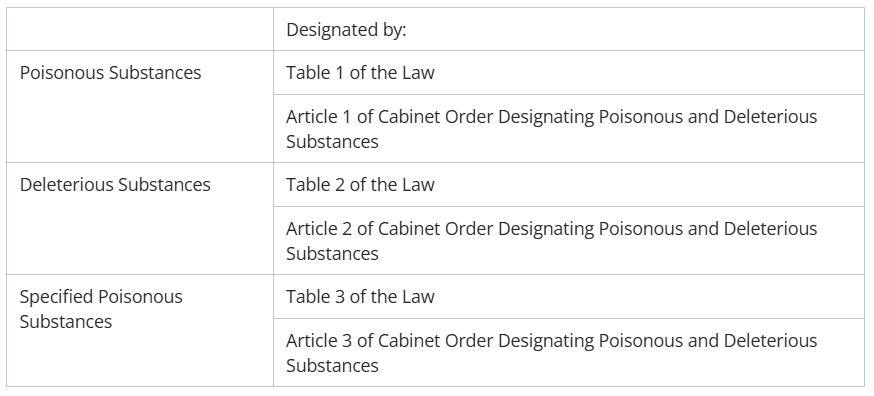 The Cabinet Order Designating Poisonous and Deleterious Substances was amended on May 26, 2023. Registration is required per facility or store where poisonous and deleterious substances are to be handled. Each poisonous and deleterious substance manufactured, handled or sold at each location must be registered as well. One of the important prerequisites when registering a business is the appointment of a "poisonous and deleterious substances officer" who will be in charge of ensuring the safety of the workplace and prevention of any accident caused by mishandling of poisonous and deleterious substances. The registration process at a local government, including fees, can vary slightly among prefectures. The information provided by the health department of each prefecture should be consulted to determine the application requirements for the registration. All 47 prefectures maintain the information on their websites. As an example, the requirements of the Tokyo prefecture, provided by the Tokyo Metropolitan Government, are listed below. The information was obtained from the Bureau of Social Welfare and Public Health. ¶ Requirements for Manufacturer/ImporterWho needs to register?
Processing period
Where to send the application?
Fees
Validity period
Note: A registered manufacturer of poisonous and deleterious substances can only sell to other registered manufacturers, importers, or distributors. Distributor registration is required in order for the business to sell poisonous and deleterious substances to consumers or a non-registered entity. ¶ Requirements for Distributor/SellerWho needs to register?
Processing period
Where to send application
Fees
Validity period
¶ Modifying a RegistrationAn existing registration must be modified and a notification must be submitted to the MHLW or local government within 30 days in the following cases:
|
Sources
Resources
*Not available in English |
¶ Product Registration |
|
¶ Agricultural Chemicals |
|
|
Agricultural chemicals are defined by the Agricultural Chemicals Regulation Law as:
The Agricultural Chemicals Regulation Law requires the registration of agriculture chemicals before they can be manufactured in or imported to Japan. Manufacturers and importers of agricultural chemicals must apply for registration via the Incorporated Administrative Agency Food and Agricultural Materials Inspection Center (FAMIC) to the Minister of Agriculture, Forestry, and Fisheries. Information demonstrating the quality and safety of the agricultural chemicals needs to be submitted for registration, including test results concerning the efficacy against diseases and pests, negative effects on crops, toxicity to humans, and residue in crops, etc. Detailed information can be found at FAMIC.
¶ What must be submittedA sample of the agricultural chemical should be provided for registration. The application dossier should include the following documents:

|
Sources Resources |
¶ Cosmetics |
|
|
Cosmetics products in Japan are subject to the regulatory requirements under the Act on Securing Quality, Efficacy and Safety of Products Including Pharmaceuticals and Medical Devices (the Act). The Act was first issued in 1960 under the former title of Pharmaceutical Affairs Act, and the current framework and title were introduced by way of an amendment issued in November 2013. The Act and related regulations establish the obligations for the business entities that make cosmetic products available on the market. The Act covers a wide range of products that affect our bodies, including medical products. The product categories covered under the scope of the Act are:
Navigator mainly provides the information concerning cosmetics. Cosmetic regulations are administered by the Ministry of Health, Labour and Welfare (MHLW) Pharmaceutical Safety and Environmental Health Bureau. 
|
Sources
Resources
*Not available in English 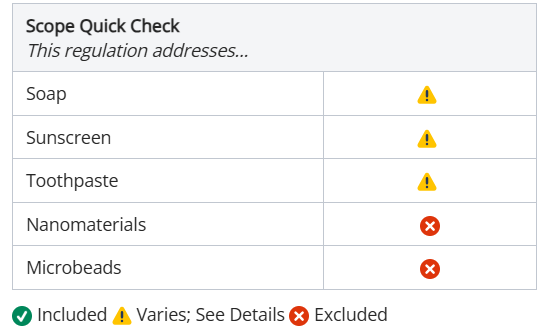 |
¶ License RequirementsThere are separate sets of obligations for the 'manufacturing of cosmetics' and 'marketing of cosmetics', and each business type requires a separate license. Anyone who engages in the business to make cosmetic products available on the market requires a marketing license for cosmetics and is solely responsible for every aspect of each cosmetic product that it provides to the market, including ensuring the safety of products, quality management, advertising, and any product defect. While requiring a different type of license, manufacturers of cosmetics are those producing cosmetic products by mixing raw materials, filtration, and etc., and packaging and labelling the product. With a manufacturing license, the entity does not place the product on the market. A foreign manufacturer intending to manufacture cosmetics that are exported to Japan may be accredited by the Minister of Health, Labour and Welfare. (Act, Article 13-3). An application should be submitted to Pharmaceuticals and Medical Devices Agency (PMDA). For information on the application process, please refer to the document titled Application for Accreditation of Foreign Manufacturers for details. 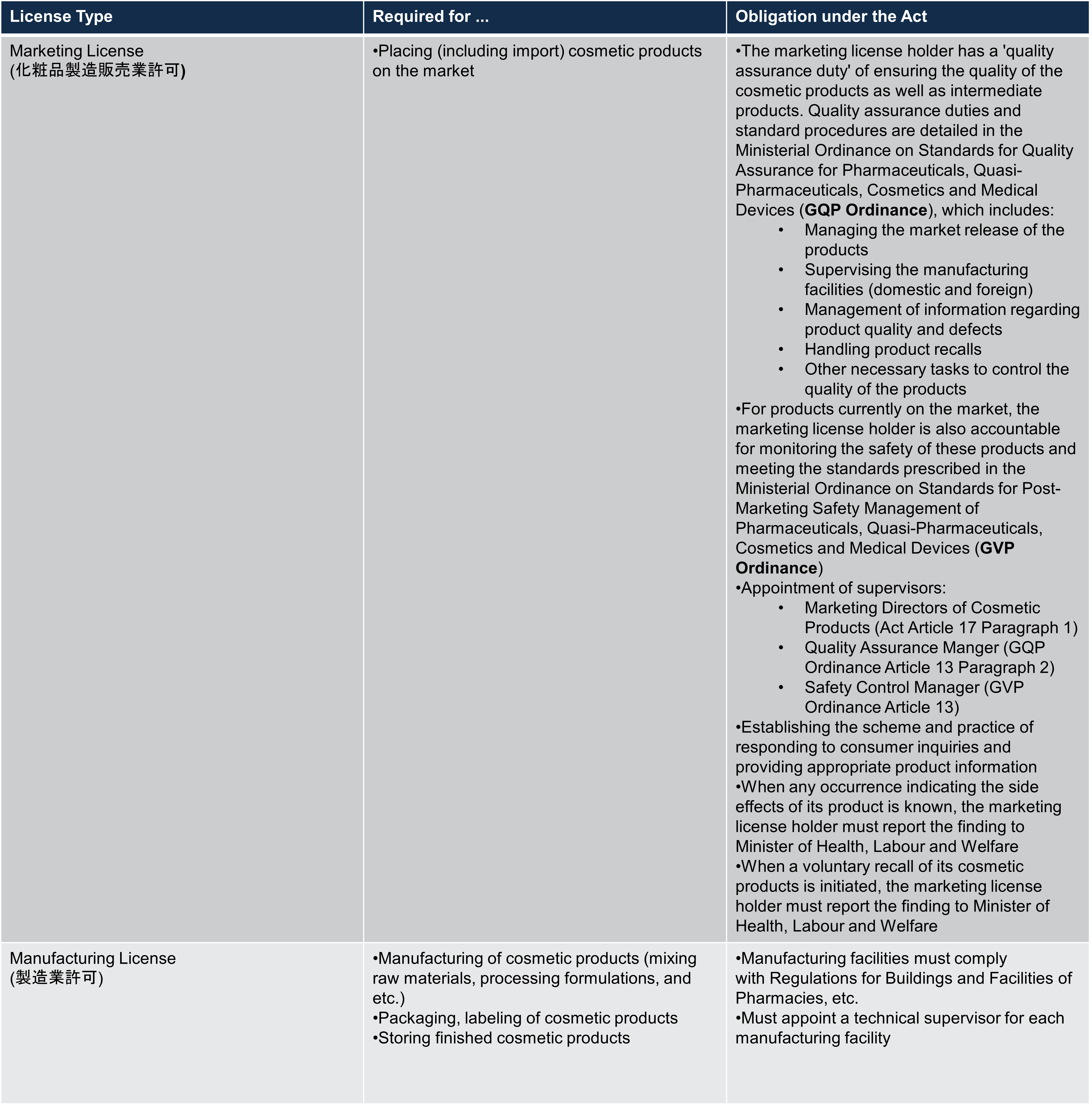 Retailers and distributors do not require a license to sell cosmetic products as long as they purchase their product for sale from an entity holding a marketing license. An application for a license must be submitted to the governor of the prefecture where the principal office of the business is located, and once granted, the license must be renewed every 3 years. |
Sources
*Not available in English |
¶ Standards for Cosmetics IngredientsThe Act requires that ingredients used in cosmetics product conform to the Cosmetic Standards (Ministry of Health and Welfare Notification No. 331, 2000). Under this regulatory framework, cosmetic ingredients fall into two broad categories - 'preservatives, UV absorbers, and tar colors' and 'everything else.' For preservatives, UV absorbers, and tar colors, the standards are presented as a positive list comprised of the substances that are allowed in cosmetics products and corresponding maximum allowable amounts. In contrast, the ingredients used other than preservatives, UV absorbers, and tar colors are regulated based on the various negative lists established in the Standards, and unless identified in these lists, any substance can be used as an ingredient for a cosmetic product, provided that the marketing license holder is accountable for the safety of the substance. 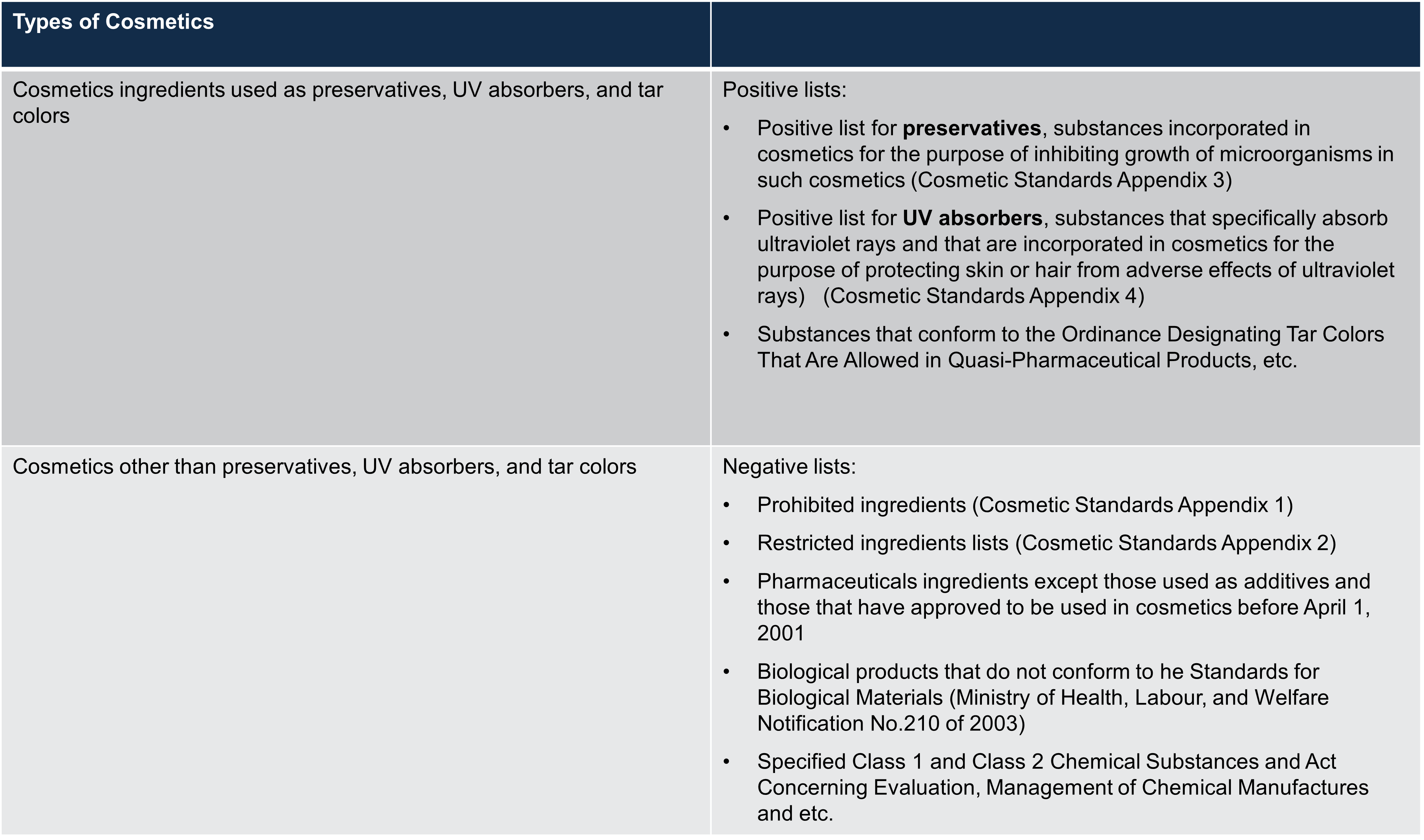 |
Sources
*Not available in English |
¶ Notification of Cosmetic ProductsThe marketing license holder must notify the Minister of Health, Labour and Welfare of its cosmetic product prior to placing it on the market (Act, Article 14-9). Submission documents can be prepared using Notification Software provided by MHLW free of charge. ¶ Required Information
When there is any change in submitted information, the marketing license holder must notify the Minister of Health, Labour and Welfare within 30 days. |
Resources *Not available in English |
¶ LabellingThe following information must appear in the immediate container and outer packaging of the cosmetic product. All information must appear in Japanese, and the language used must be clear and explicit and easily understood by purchasers and users. (Act, Article 53) 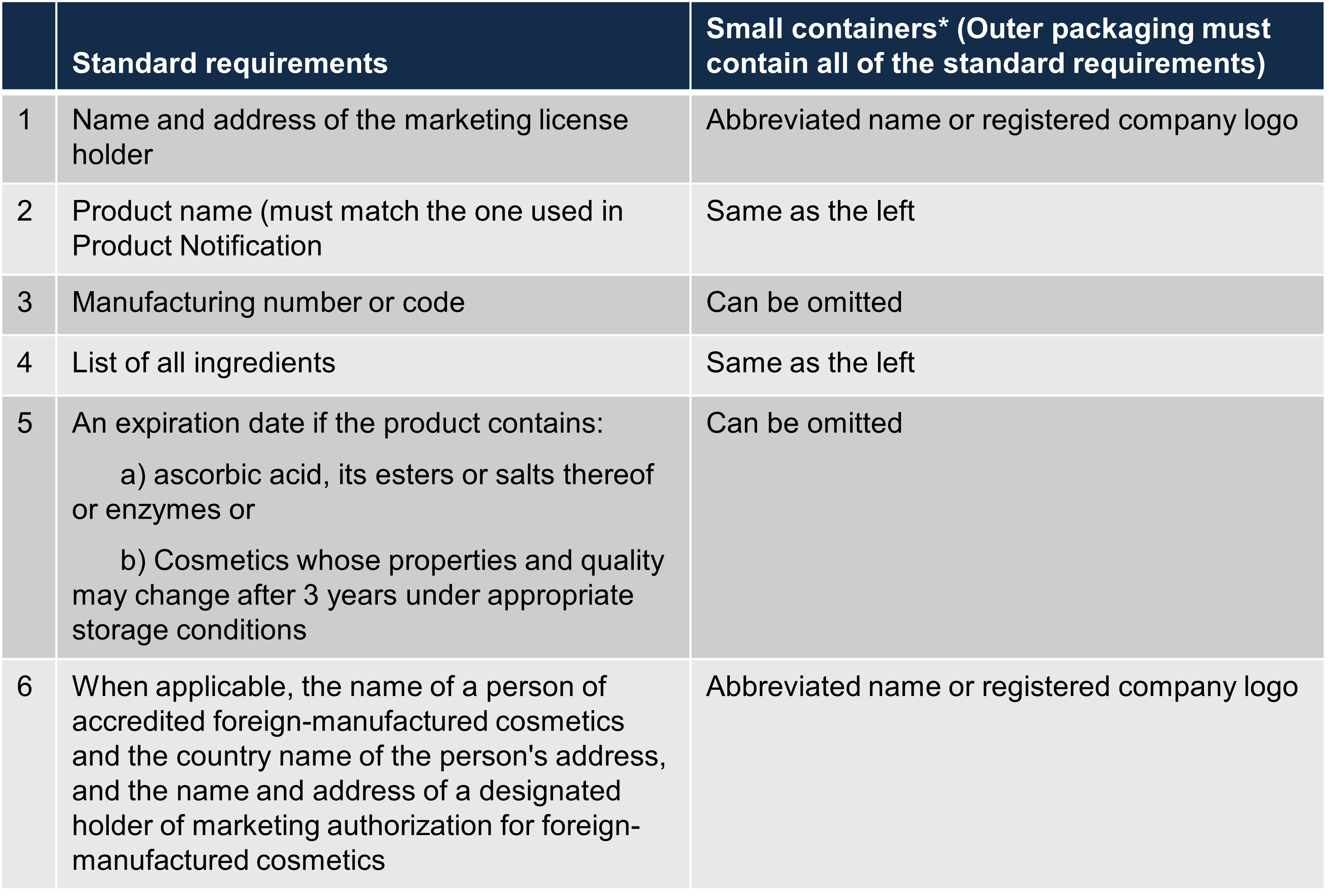 * The following cosmetics are considered as small containers
The following information must not be appear on labelling.

|
Sources
Resources
*Not available in English |
¶ Notifications |
|
¶ New Chemical SubstancesThis page contains information about New Chemical Substance Notifications for both the CSCL and the ISHL. 
|
Sources
Resources *Not available in English |
¶ Existing Chemical SubstancesUnder the Act Concerning Evaluation, Management of Chemical Manufacturers and etc., also known as the Chemical Substance Control Law (CSCL), existing chemical substances are categorized into the following groups based on risk evaluation.
The 4th amendment to the CSCL by Law No. 53 published on June 7, 2017 (effective on April 1, 2018) introduced a new definition "Specified General Substances". This category was developed due to the determination that some chemical substances which are not categorized as "Specified Chemical Substances" or "Priority Assessment Chemical Substances" have very strong toxicity. Special handling for these chemical substances is required. The different groups of substances have different notification requirements. Under the CSCL, all of the existing chemical substances other than Class I Specified Chemical Substances are subject to annual reporting requirements. Manufacturers and importers in Japan must submit a report to the METI, which must contain the information regarding the amount of each chemical they manufactured or imported and the use of each substance. |
|
¶ Class II Specified Chemical SubstancesA company that manufactures or imports any Class II Specified Chemical Substance or that imports a product in which any Class II Specified Chemical Substance is contained shall submit a notification on planned manufacturing or importing quantities in the year and a notification on manufactured or imported amount in the previous year. A notification is not required for the quantity below the threshold quantity. ¶ Threshold quantity
¶ Exemption from notification
¶ Penalties for not reporting
¶ Submission time
¶ Dates of list updates
|
Sources
Resources
*Not available in English |
¶ Monitoring Chemical Substances, Priority Assessment Chemical Substances, and General SubstancesThese three groups of chemical substances are subject to annual reporting requirements regarding their manufactured or imported amount in the previous year and specified use(s).The different groups of substances have different threshold quantities and threshold concentrations, below which the notification is not required. ¶ Threshold quantity
¶ Threshold concentration
¶ Exemption from notification
The reporting obligation falls on manufacturers and importers located in Japan. However, when it is difficult to obtain chemical information from suppliers abroad, the METI allows non-Japanese manufacturers to directly submit their reports. This is only allowed for General Substance reporting and not for Monitoring Chemical Substances and PACS. ¶ Penalties for not reporting
¶ Submission time for all three groups
¶ Dates of list updates
There is no official list for General Substances. All chemical substances listed in the CSCL inventory except Class I Specified Chemical Substances, Class II Specified Chemical Substances, Monitoring Chemical Substances and PACS are considered General Substances. Specified General Substances The 4th Amendment of CSCL determines Specified General Substances to also be subject to reporting. However, the details of the reporting requirement are not clear yet. The corresponding agency is working on creating a list of such chemical substances. |
Sources
Resources
*Not available in English |
¶ Japan Poison Information Center
|
Sources
*Not available in English |
¶ Restrictions and Bans |
|
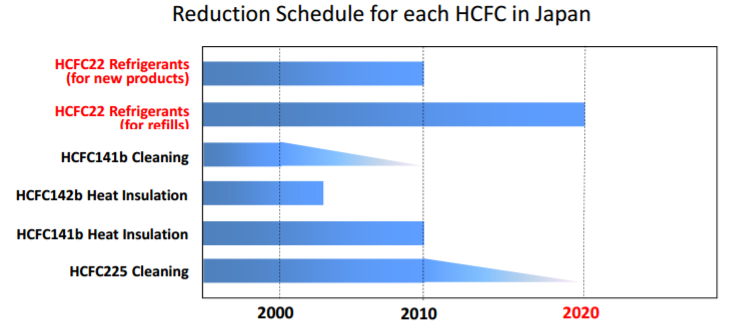
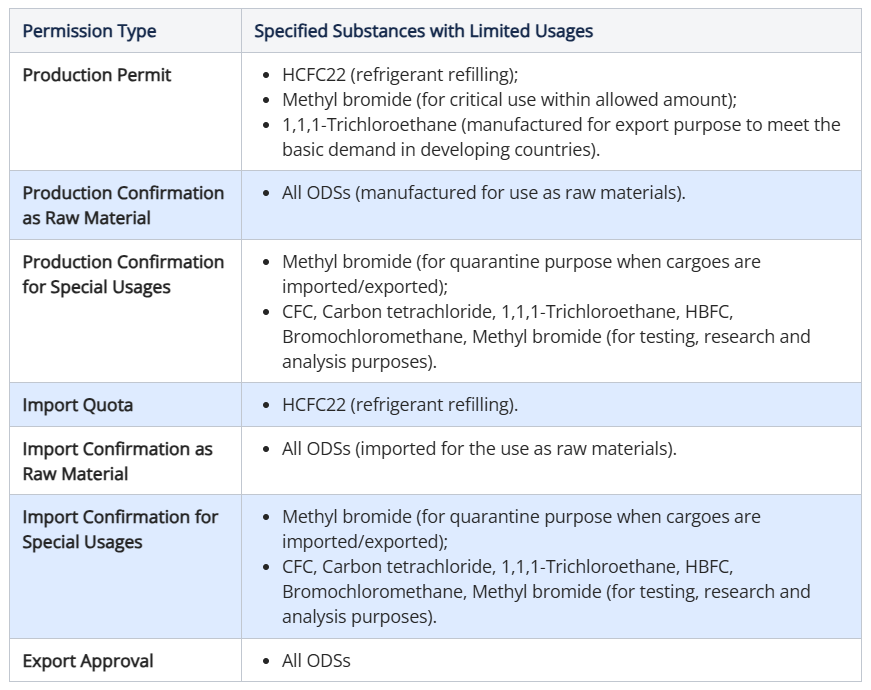
¶ Ozone Depleting SubstancesAs a party to the Vienna Convention for the Protection of the Ozone Layer (adopted in 1985) and the Montreal Protocol on Substances that Deplete the Ozone Layer (adopted in 1987), Japan published the "Act on the Protection of the Ozone Layer through the Control of Specified Substances and Other Measures" in 1988. This Act stipulates regulations concerning the manufacture of the Specified Substances, control of their discharge and rationalization of their use, etc. to fulfill the obligations and decisions of the contracting parties. Specified Substances are the Ozone Depleting Substances (ODSs) in the Appended Table of the "Cabinet Order for Enforcement of the Act on the Protection of the Ozone Layer through the Control of Specified Substances and Other Measures." 
|
Sources
Resources *Not available in English |
¶ Persistent Organic Pollutants (POPs)The Japanese government acceded to the Stockholm Convention on August 30, 2002. As a contracting party to the Convention, Japan has been positively participating in the work to establish a legally binding international framework. There are multiple laws regulating POPs in regards to their manufacturing, use, import and export: Chemical Substances Control Law, PRTR Law, Agricultural Chemicals Regulation Law, Pharmaceuticals and Medical Devices Act, and Foreign Exchange and Foreign Trade Act.
¶ Chemical Substances Control LawUnder the Chemical Substances Control Law, chemical substances which possess low degradability, high bioaccumulation and long-term toxicity to humans or top-level predators are designated as Class I Specified Chemical Substances. The POPs targeted by the Stockholm Convention (Annex A (Elimination), Annex B (Restriction), and Annex C (Unintentional production)) are regulated as Class I Specified Chemical Substances, except PCDDs and PCDFs that are not manufactured intentionally. In principle, with respect to Class I Specified Chemical Substances, the manufacture and import are forbidden and the use is restricted. However, they still can be used under stringent control if no alternatives exist and their uses would not threaten human health. For the POPs contained in products in small amounts as byproducts, if they don't pose any threats to human health and the content rates have been lowered to technically and economically feasible levels, then they are not handled as Class I Specified Chemical Substances. 
|
Sources
Resources
*Not available in English |
¶ Restriction of Hazardous Substances (RoHS)Japan doesn't have an equivalent regulation to the EU RoHS Directive, which restricts the use of hazardous substances in electrical and electronic equipment. However, the Law for Promotion of Effective Utilization of Resources aims to provide a mechanism to promote recycling of goods and resources, and to reduce waste by utilizing recyclable resources and reusable parts. The law was enacted on April 26, 1991 and emphasizes Design for the Environment (DfE) and delivery of information on the specific substances contained in electrical and electronic equipment. The aim of the law is to promote integrated initiatives for the 3Rs (Reduce, Reuse, Recycle) that are necessary for the formation of a sustainable society. Under its cabinet order, 10 industries and 69 product categories have been designated. The ministerial ordinance stipulates voluntary actions businesses should take, including 3R policies at the product manufacturing stage, 3R consideration at the design stage, product identification to facilitate separate waste collection, and the creation of voluntary collection and recycling systems by manufacturers. This Japanese law does not restrict use of hazardous substances; instead, the law requires "marking for presence" of these substances if contained in a product above a threshold value. Supplementing the Law, Japanese Industrial Standard, JIS C950, titled "the Marking for Presence of the Specific Chemical Substances for Electrical and Electronic Equipment" (J-Moss) was established to specify labeling requirements for products containing hazardous substances, and the requirements were made mandatory by the Law for Promotion of effective Utilization of Resources for the following 7 designated products: personal computers, unit-type air conditioners, television sets, refrigerators, washing machines, clothes dryers, microwaves. The restricted substances and their related thresholds specified by J-Moss are: 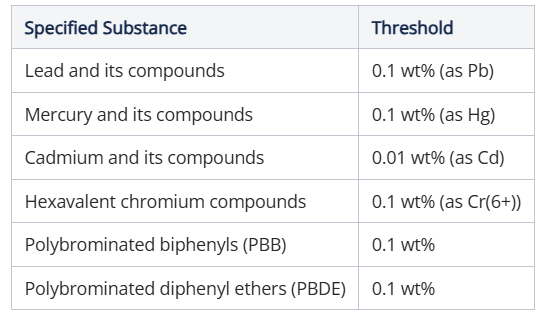 |
Sources
Resources |
¶ SDS + Label |
|
¶ ClassificationThe Japanese government adopted the Globally Harmonized System of Classification and Labelling of Chemicals (GHS) in 2006. Japan has national standards for GHS classification, SDSs and labels. Chemical substances and mixtures should be classified in accordance with JIS Z 7252, Classification of Chemicals based on GHS, while SDSs and labels should be prepared in accordance with JIS Z 7253, Hazard Communication of Chemicals Based on GHS – Labeling and SDS. JIS Z 7252 establishes the classification criteria for physical hazards, health hazards and environmental hazards, while JIS Z 7253 specifies requirements for communicating those hazards through labels and SDSs. The current editions, JIS Z 7252:2025 and JIS Z 7253:2025, were released on December 25, 2025 and align Japan's GHS standards with the 9th revised edition of the UN GHS. During the five-year transition period, the 2019 editions may continue to be used. JIS Z 7252:2025 adopts the GHS building blocks used in Japan, with certain categories not adopted, including:
The Japanese government also publishes "GHS Classification Guidance for Enterprises," which is based on JIS Z 7252, to help enterprises carry out GHS classification accurately and consistently. The Guidance was first published in 2009. The latest version was published in May 2024. Given the publication of JIS Z 7252:2025, the guidance is expected to be revised in the future. For those chemicals that are currently regulated by ISHL, PDSCL, and PRTR Law, the Japanese government carries out the GHS classification. This is intended to assist Japanese chemical suppliers in preparing GHS compliant SDSs and labels; however, the use of the classification is not mandatory. As of July 2026, the number of classification results published by NITE is 3560 in total. In Japan, the ISHL, PDSCL, and PRTR Law separately set hazard communication requirements for the hazardous chemical substances that each law designates. According to its own purpose and scope, each law stipulates which substances require labels and/or SDSs. Currently, the ISHL and PRTR Laws mandate the GHS standards to be used in preparation of SDSs and labels. Under the PDSCL, the GHS standards are not enforced, but recommended. CSCL Law doesn't require the use of SDSs for its regulated substances; however, it strongly recommends the supplier of a "Priority Assessment Chemical Substance" or a "Specified General Substance" convey to the downstream user that the substance is designated as such a substance. While the CSCL does not require an SDS for these substances based on categorization in the group, it would be best practice to provide one as the SDS is the typical means for communication of chemical regulatory information. |
Sources
Resources
*Not available in English |
¶ Industrial Safety and Health LawUnder the Industrial Safety and Health Law (ISHL), suppliers of regulated substances are required to prepare label and a SDS must be prepared in accordance with the Japanese Industrial Standard, JIS Z 7253 Hazard Communication of Chemicals Based on GHS – Labelling and Safety Data Sheet (SDS). Industrial Safety Health Law - 2025 Update The ISHL regulations have been significantly updated since August 2023, enforcing new requirements in phases, in April 2024 and most recently, April 2025, with a strong emphasis on expanding the scope of chemical substances requiring SDS and labeling to align with GHS. The content in this section reflects these updates. Under the ISHL, the regulated substances listed in the following tables require both hazard labels and Safety Data Sheets (SDSs).
For mixture products, the cut-off values are established through the standards issued by the Minister of Health, Labour and Welfare based on the provisions of Article 18, paragraph 3 and Article 18-2, paragraph 3 of the Cabinet Order of Enforcement of the ISHL. The complete list of substances as listed above regulations is available through the MHLW website: (https://anzeninfo.mhlw.go.jp/anzen/gmsds/gmsds640.html) Identity of the chemical or identities of any ingredients in the mixture that are listed as SDS substances by ISHL must be disclosed in Section 15 of the SDS. Concentration information of a regulated substance must be an exact percentage by weight (effective on April 1, 2024). If ingredient concentrations are trade secrets, a 10% range can be used so long as the trade secret is indicated on the SDS. However, upon request from the SDS recipient, you must disclose a more precise concentration range or weight percentage, limited to what is needed for their workplace risk assessment, under a confidentiality agreement or similar protective measures. This exemption does not apply to substances listed in the following regulations:
Mandatory review and update of "Information on Effects on Human Health" The ISHL requires the SDS to include information on the product's effects on human health. In terms of GHS, this information mainly corresponds to the following health hazard classes:
Effective on April 1, 2023, this information is required to be reviewed within 5 years from the date of last review, and when an update is required the SDS must be updated within a year. Then, the chemical supplier must notify its customers and communicate the updated information. This is a mandatory requirement for a regulated substance and any mixture product containing regulated substance(s). When information on the product level is not available, information on individual ingredients can be included. Information requirement on "Expected use and precautions concerning the use" Under the amendment to Ordinance on the ISHL, issued on May 31, 2022, information equivalent to "recommended use of the chemical and restrictions on use," required in Section 1 under the GHS, will be mandatory under the ISHL, effective, April 1, 2024. Ingredient information on Label As for labeling requirements, identity of the chemical or identities of ingredients in the mixture are no longer required as of June 1, 2016. This change was due to the increase in the number of regulated substances, and in some cases, a label including all regulated substances in a mixture is not desirable for the sake of readability. To decide which ingredients to disclose, the Japanese Chemical Industry Association (JCIA) provides the following criteria:
Companies must also keep in mind that the amendment published in January 2012 requires companies to make efforts to provide labels and SDSs for any substance that is classified as hazardous according to the GHS standard but is not currently regulated by the Law. Ingredient information on SDS The following information requirements apply under the ISHL:
Under the ISHL, alternative chemical names may also be used in SDSs to protect confidential business information, effective April 1, 2026. This provision allows suppliers to substitute or generalize chemical identities for substances that meet specific eligibility criteria, primarily those with relatively low hazard classifications based on GHS. The use of alternative names is subject to strict conditions, and mandatory disclosure obligations under applicable regulations still apply. For further details on eligibility criteria and application rules, please refer to the Trade Secrets section. Concentration Standards The ISHL established occupational exposure limits for its regulated chemical substances as part of major amendment to the law issued in May 2022. Effective April 1, 2024, Article 577-2 Paragraph 2 of the Ordinance of the ISHL requires the employer to maintain its worker’s exposure level to regulated substances below the newly established TWAs, STELs, and Ceiling values. These values, referred to as Concentration Standards under the ISHL, are specified listed in the Ministry of Health, Labor and Welfare (MHLW) Notification No. 177, published on April 27, 2023. The notification has since been amended several times, most recently on March 31, 2026, expanding the list from the original 67 substances to approximately 300 substances. The MHLW is expected to add several more substances in the coming years. For a substance or an ingredient of a mixture with the Concentration Standards, the Concentration Standards information shall be included in Section 8 of the SDS. Identification of Chemical Substances Causing Skin and Other Disorders Article 594-2 Paragraph 1 of the Ordinance of the ISHL requires that employers must have workers use appropriate protective equipment such as impervious protective clothing, protective gloves, footwear, or protective glasses when workers manufacture or handle chemicals causing skin damage. Chemicals causing skin damage are: (1) Skin irritating substances that may cause skin or eye irritation and damage. These substances are classified as Category 1 for Skin Corrosion/Irritation, Serious Eye Damage/Irritation, or Respiratory or Skin Sensitization according to the Globally Harmonized System (GHS) classification or Safety Data Sheet (SDS) provided by suppliers; (2) Skin-absorbable substances that may cause health problems via skin absorption; and (3) Specific chemical substances designated by the Enforcement Order of the Industrial Safety and Health Law and Ordinance on Prevention of Hazards Due to Specified Chemical Substances. These are highly toxic substances for which the ministry has stipulated skin protection measures that are already enforced. The MHLW provides a comprehensive list in MHLW Notification No. 0704-1. SDS must identify any ingredients that are listed as Chemical Substances Causing Skin and Other Disorders in Section 15. Updating existing SDS If a product already has an SDS and contains substances subject to these new regulations, please make every effort to promptly inform recipients of an updated SDS. This updated SDS should include the newly applicable laws and regulations and the names of the ingredients they now cover. While the SDS is being updated, please also strive to inform recipients of the new legal requirements and the affected ingredient names through other means, such as posting this information on a website. |
Sources
*English translations are out of date. Please consult the official publication in Japanese. Resources
|
¶ Poisonous and Deleterious Substances LawThe Poisonous and Deleterious Substances Control Law categorizes substances based on their acute toxicity into the following three groups and all substances listed in these groups require a label and an SDS: 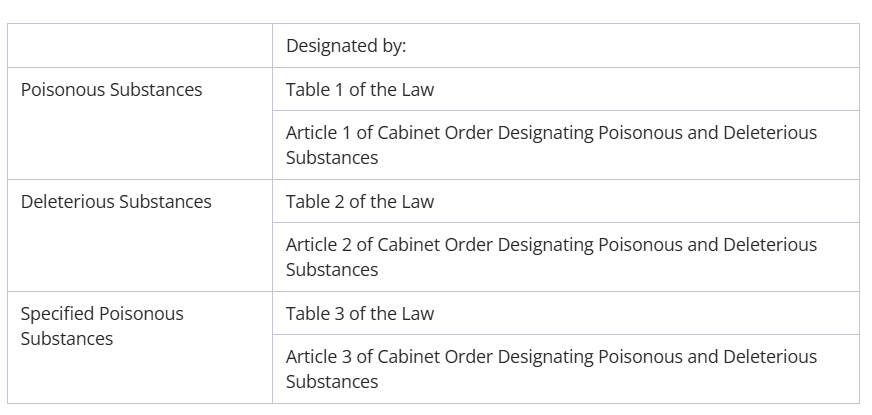 The Cabinet Order Designating Poisonous and Deleterious Substances was amended on October 29, 2025. Identity of the chemical or identities of any ingredients in the mixture that are listed as SDS substances by PDSCL should be disclosed in Section 15 of the SDS. The concentration(s) of the Poisonous and Deleterious Substance(s) should be also provided as well. The Globally Harmonized System (GHS) has not been formally incorporated into the PDSCL. However, the Ministry of Health, Labour, and Welfare recommends the use of JIS Z 7253 for the preparation of labels and SDSs. |
Sources
*Not available in English |
¶ PRTR LawThe primary purpose of the Japan’s PRTR is to collect information about the chemical emission to the environment from activities involving manufacturing, processing, and use of chemical substances. Consequently, it is necessary for each business to keep track of the chemicals it purchases and sells. For this purpose, hazard communication becomes an important responsibility among manufacturers and users of chemicals. The PRTR Law designates certain chemical substances as Class 1 Designated Substances and Class 2 Designated Chemical Substances. If a business intends to transfer any of the designated chemical substance to another business, it must provide the recipient of the chemical substance with a Safety Data Sheet (SDS) and a label containing information regarding properties and handling of the chemical. Under the PRTR Law, labels and SDSs must be prepared according to the Japanese Industrial Standard, JIS 7253 Hazard Communication of Chemicals Based on GHS – Labelling and Safety Data Sheet (SDS). Class 1 Designated Substances and Class 2 Designated Chemical Substances are listed in the Cabinet Order for the Act on Confirmation, etc. of Release Amounts of Specific Chemical Substances in the Environment and Promotion of Improvements to the Management Thereof (PRTR Law). Identity of the chemical or identities of any ingredients in the mixture that are listed as either Class 1 or Class 2 Designated Substances by the PRTR Law should be disclosed in Section 15 of the SDS. When a product is a mixture, the percentage composition of each of these chemicals must be expressed using two significant digits. The use of composition ranges is not permitted. The Ministry of Economy, Trade and Industry published the "SDS and Label Guidance Based on the PRTR Law" in 2016. The SDS requirements under the PRTR Law are specified in the Guidance. ¶ 2021 Amendment - Class 1 and Class 2 Chemical Substances lists updateOn October 20, 2021, a partial amendment to the Ordinance for Enforcement of the Act on Confirmation, etc. of Release Amounts of Specific Chemical Substances in the Environment and Promotion of Improvements to the Management Thereof, was issued, updating the Class 1 Designated Chemical Substances and the Class 2 Designated Chemical Substances in the Ordinance. Class 1 Designated Chemical Substances has increased from 462 substances to 515 substances. The number of Class 2 Designated Chemical Substances increased from 100 substances to 134 substances.
The amended PRTR Ordinance will come into effect on April 1, 2023, and henceforth, the substance tracking for the purpose of the PRTR reporting as well as SDS preparations for the newly designated substance will be required. The requirement to prepare an SDS for those substances deselected from the designation will remain until the effective date. After April 1, 2023, the requirement will not longer remain. To facilitate a smooth transition, the Ministry of Economy, Trade, and Industry (METI) is requesting business entities to prepare SDSs for newly Designated Chemical Substance during the transition period. In practice, this means the business entities are required to include the name and the concentration information of the Designated Chemical Substance on the SDS and also distinguish two different status, i.e. between before and after the amendment becomes effective. The component cannot be claimed as confidential business information (CBI) under this law. The information on the Designated Chemical Substances can appear either in Section 3 or 15 of the SDS.
Each Designated Chemical Substance is assigned an Ordinance Number, and the Ordinance Number can be reassigned each time the Ordinance is amended. This can be an unnecessary burden on businesses as a Designated Chemical Substance can have two different Ordinance Numbers, and they need to be managed during the transition period. In order to ease this burden, the METI introduced the Control Number system, where the Ministry provided a separate aggregated list of current and amended version of Class 1 and Class 2 Designated Chemical Substances and assigned a unique Control Number to each individual Designated Chemical Substance. Starting from the effective date of April 1, 2023, the Control Number will be identified along with the chemical name in the PRTR reporting. Giving this potential new requirement, it is strongly recommended by the METI to include the Control Number of the Designated Chemical Substance on the SDS. |
Sources
Resources
*Not available in English |
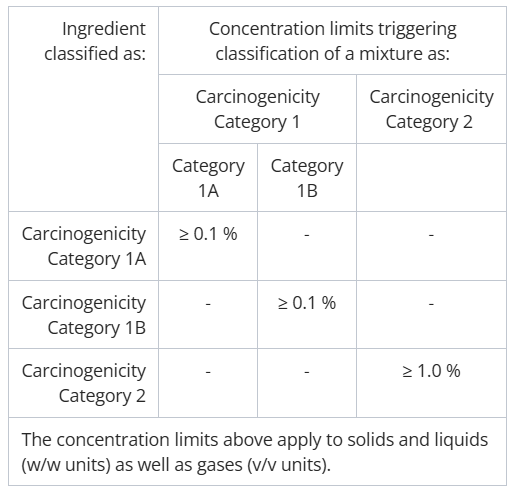
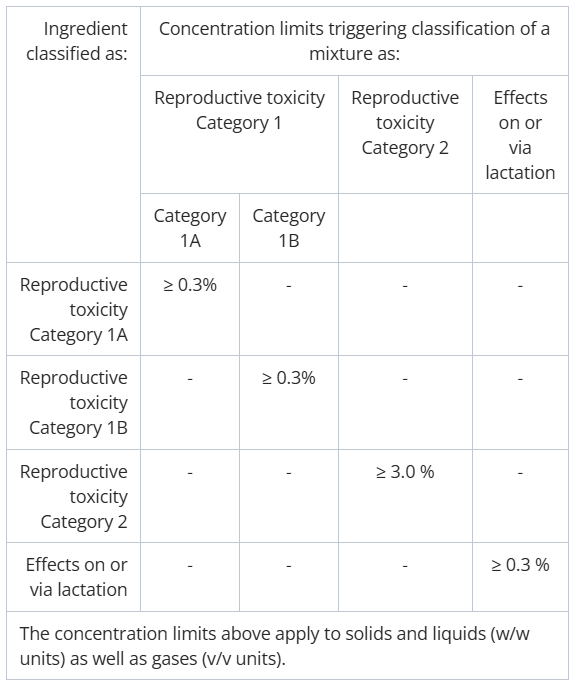
¶ Cut-off Values/Concentration LimitsWhere test data is not available for a mixture, for health and environmental endpoints, the GHS allows for classification based on the hazards of the substances in the mixture. The GHS usually defines the concentration at which a hazardous substance causes a mixture containing that substance to be classified, for most hazards. These are known as Concentration limits / Cut-off values. Countries must additionally set the thresholds for mixture classification for certain hazards:
Japan is implementing specific classification cut-off values and concentration limits for mixtures for certain hazard classes (see JIS Z 7252:2025), as shown below. ¶ SensitizationConcentration limits of ingredients of mixture classified as skin sensitizers or respiratory sensitizers 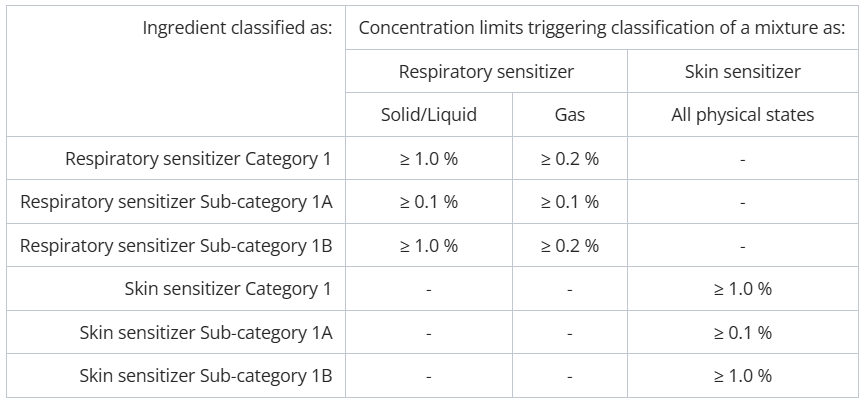 If a skin sensitizer or a respiratory sensitizer is present in the mixture at a concentration of 0.1% or more, even if it is less than the concentration limit, ingredient information including classification category and the concentration or the concentration range must be stated in SDS. This principle is also applied to impurities and stabilizing additives. 
|
Sources
*Not available in English A copy of Japanese JIS can be purchased from the Japanese Standards Association. |
¶ SDSJIS Z 7253 sets out the rules for the preparation of Safety Data Sheets (SDSs). Please see the ISHL, PDSCL, and PRTR Laws regarding scope of the hazard communication requirements.
|
Sources
A copy of English and Japanese JIS can be purchased from the Japanese Standards Association. Resources
|
¶ Sections of the Safety Data Sheet |
|
¶ LabelWhen a chemical product is classified into any of the hazard classes or hazard categories according to the GHS classification criteria (JIS Z 7252), the supplier of the product shall print the GHS label elements or affix a label containing the label elements (JIS Z 7253). Other than the GHS labeling requirements, some Japanese domestic laws and regulations have special requirements on labeling. When a container is not large enough for the entire label, it can be tagged with all necessary label elements except for those required by laws. When new information about the product becomes available, the supplier shall update the label promptly. Labelling requirements specific to cosmetics may be found in the cosmetics section. |
|
¶ GHS Labeling RequirementsAccording to the Japanese Industrial Standard JIS Z 7253:2025 Hazard Communication of Chemicals Based on GHS – Labelling and Safety Data Sheet (SDS), a GHS label shall contain the following label elements. Label elements:
Label elements are assigned based on the hazard classes and hazard categories into which the product is classified. The allocation of label elements is described in detail in the Annex A of JIS Z 7253: 2025. Typically, the Japanese domestic laws identify the designated chemical substances by chemical names, but not CAS numbers. Therefore, a CAS number is not part of labeling requirements. It is important to remember, however, that the name(s) shall appear as the one designated by the law. JIS Z 7253: 2025 further advises that any substance that is likely to cause harm to those who handle the product be identified on the label. In the case where the component is neither designated by the Japanese Laws nor having any risk to the environment and human health, the identity of the chemical can be suppressed or a generic name may be used. For a small container where it is difficult to print all of the label elements, JIS advises that information be printed separately and tied to the container. |
Sources
A copy of English and Japanese JIS can be purchased from the Japanese Standards Association. Resources
|
¶ Labeling items required by the Japanese lawsSome Japanese laws have special requirements for labeling. The required items by different laws are summarized below: ¶ ISHLLabeling Substances
¶ PDSCLPoisonous and Deleterious Substances

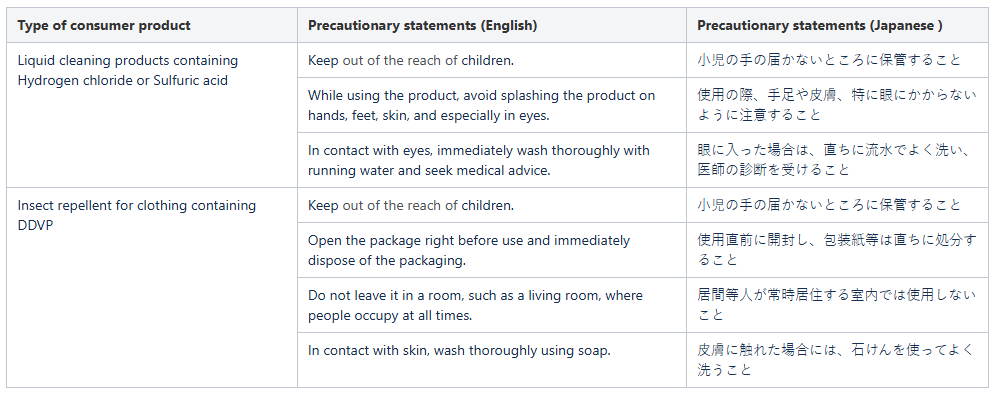 ¶ PRTRClass 1 and 2 Designated Substances
¶ Fire Service ActHazardous Materials
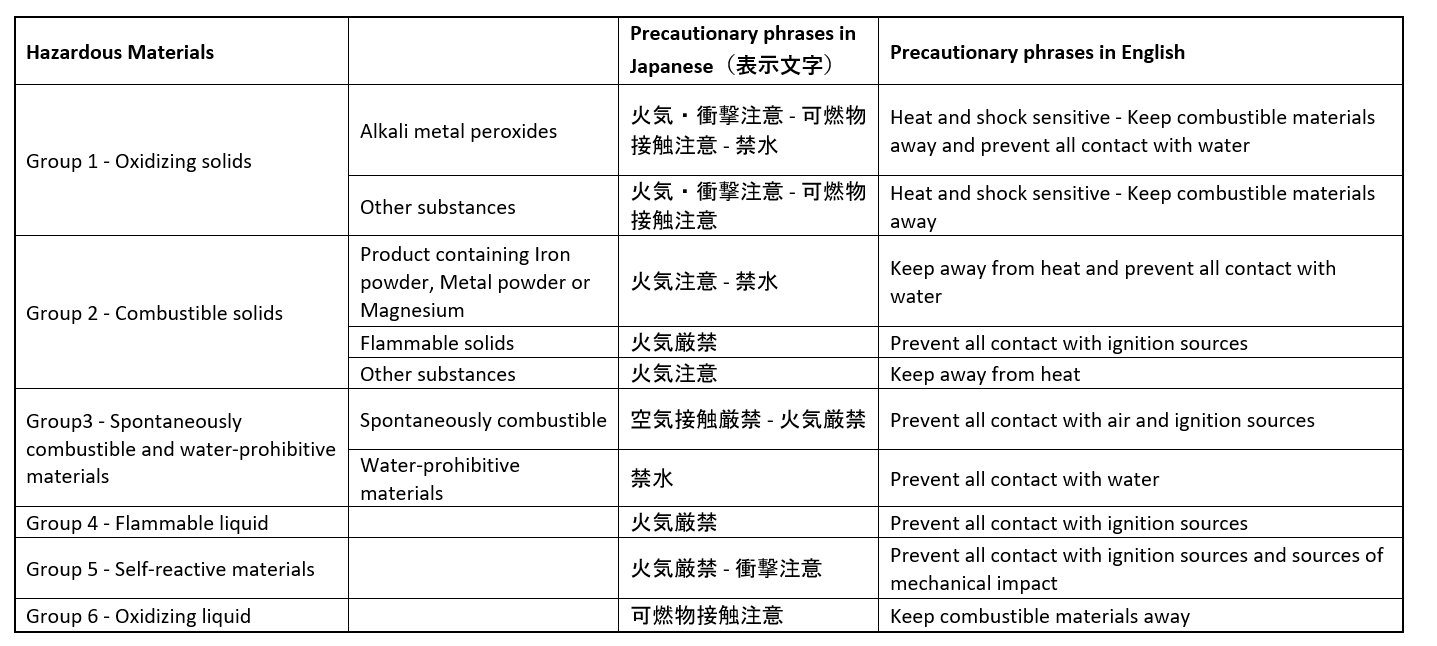 ¶ CSCLClass I and II Specified Chemical Substance
Additionally, Yellow Card System is adopted by Japan Chemical Industry Association (JCIA) to provide emergency measurements for the transportation of chemical substances. When a Yellow Card is difficult to carry, Container Yellow Card is highly recommended by the JCIA. Container Yellow Card is a labeling element containing the items addressed in Yellow Card in a condensed form. Japanese businesses adopt Container Yellow Card and add the following information on a product label in addition to the label elements required by Japanese laws:
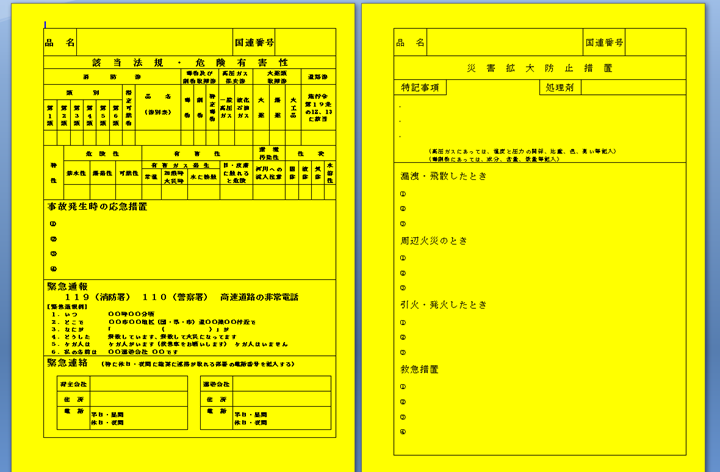 |
Sources
Resources
*Not available in English |
¶ Trade SecretsTrade Secrets Information contained in a label and an SDS is non-confidential; that is, a manufacturer, importer, or distributor cannot treat an SDS as a confidential document. However, specific information—particularly in Section 3 (Composition/Information on Ingredients)—such as CAS numbers, concentration, chemical formula, and official gazette number, may be claimed as a trade secret. The terms "trade secret (営業秘密)" or "non-disclosed (非公開)" can be used for each of the confidential element. New ISHL Provision for Alternative Chemical Names (Effective April 1, 2026) Under the amended ISHL, companies may use substitute (alternative) chemical names in SDSs for certain substances meeting defined criteria. This represents an additional mechanism to protect confidential business information. Eligibility Criteria A substance qualifies for alternative naming only if it is considered to present a relatively low risk to worker health and safety and satisfies all of the following conditions: 1. Exclusion from Certain Regulatory Listings The substance must not be:
2. Restrictions Based on GHS Hazard Classes The substance must meet the following conditions:
OR
3. Prohibition of Severe Hazard Classifications The substance must not be classified as Category 1 in any of the following hazard classes:
4. Acute Toxicity Restriction
5. Mixture-Specific Condition
Rules for Constructing Substitute Names Where eligible, substitute chemical names may be created by modifying structural or compositional elements of the original chemical name, including:
In principle:
If the substance could still be identified due to limited candidates, companies may instead provide hazard classification information in place of a substitute name.
Existing Trade Secret Rules The introduction of alternative naming does not override mandatory disclosure obligations. Where disclosure is required under applicable laws:
For substances classified as hazardous under GHS at or above cut-off values:
Mandatory Disclosure Requirements
|
Sources
A copy of English and Japanese JIS can be purchased from the Japanese Standards Association. Resources
|
¶ Occupational Exposure Limits The Japan Society for Occupational Health (JSOH) recommends the Occupational Exposure Limits (OELs) as reference values for preventing adverse health effects on workers caused by occupational exposure to chemical substances. The recommendation is updated and published annually, and the last update was made on May 22, 2024. Notes for determining the Occupational Exposure Limits: 1. OELs are set at conditions under which no skin absorption will take place. Exposure concentration is defined as the concentration of a chemical substance in air that will be inhaled by a worker during a job without the use of protective respiratory equipment. 2. Types of health effects considered in setting OELs depend on the substances involved; an explicit health impairment provides the basis for OELs in certain substances, while health effects such as discomfort, irritation or CNS suppressive effects afford the basis in others. Thus, OELs cannot be used simply as a relative scale of toxicity. 3. Due to the variance in individual susceptibilities, discomfort, deterioration of pre-existing ill health or occupational disease may be induced at levels of exposure below the OELs, even though the chances of this should be remote. The ISHL established occupational exposure limits for its regulated chemical substances as part of major amendment to the law issued in May 2022. Further revisions were announced in MHLW Notification No. 196 dated May 8, 2025, which added 112 new substances and revised values for several existing ones. These changes will be enforced beginning on October 1, 2025, under Article 577-2 Paragraph 2 of the Ordinance of the ISHL. Employers are required to maintain workers’ exposure levels below the newly established TWAs, STELs, and Ceiling values. The updated list of substances and their Concentration Standards is available on the MHLW website. For a substance or an ingredient of a mixture with Concentration Standards, the Concentration Standards information shall be included in Section 8 of the SDS. |
Sources |
¶ Transport |
|
|
Japan's Ship Safety Act was enacted in 1933 in order to establish necessary measures for maintaining Japanese ships in a seaworthy state and the safety of human life on board. Subsequently, Japan's Ministry of Transportation issued series of Ordinances and Notifications detailing the technical standards on structures and facilities specified in the Ship Safety Act. The regulations identify dangerous substances and provide provisions regarding how these substances should be handled and controlled during sea transport. Table 1 of the Ministry of Transportation Notification of Establishing the Rules for Transporting Dangerous Goods by Ship contains the so called Dangerous Goods List, which adopts the International Maritime Dangerous Goods (IMDG Code). The table contains UN number, proper shipping name, hazard classification(s), class, packaging group, limited quantity, packing instructions and other special provisions for each chemical. Japan's Ministry of Land, Infrastructure, Transport, and Tourism is currently responsible for administrating the Act and issuing the regulations. |
Sources
Resources *Not available in English |