¶ Recent Updates2026
2025
2023
|
|
¶ Background |
|
|
Singapore is an island of about 620 square kilometers in a very densely populated area, with approximately 4,000 people per square kilometer. Thus, it is crucial to properly control hazardous substances and minimize exposure to accidental release. The Singapore National Environment Agency (NEA, http://www.nea.gov.sg/), was formed on July 1, 2002. It is the leading public organization responsible for improving and sustaining a clean and green environment. The Environment Pollution Control Act (EPCA), which was developed for protection and management of environment and resource conservation, began operation on April 1, 1999. The title was changed on January 31, 2008 to Environment Protection and Management Act (EPMA, https://www.nea.gov.sg/our-services/pollution-control/chemical-safety/hazardous-substances). EPMA consolidates previously separate laws on air, water, noise pollution and hazardous substances control, and provides a comprehensive framework of legislative control of environmental pollution. Now EPMA is administered by the NEA Pollution Control Department (PCD). Under EPMA, there are various sub-legislations on controlling different substances including hazardous substances, trade effluent, air impurities, ozone depleting substances and so forth. The other main agencies and legislations concerning chemical control in Singapore are listed below:
Besides the above agencies, information regarding chemical control can be found on the Singapore Chemical Industry Council website (SCIC, http://www.scic.sg/) and the Singapore Standards website (https://www.singaporestandardseshop.sg/Home/Index). People can also refer to the Singapore electronic gazette (http://www.egazette.com.sg) for the newest legislation information. |
|
¶ Inventories |
|
| Currently, a national chemical inventory does not exist in Singapore. | |
¶ Substance Registration |
|
| Currently, there are no substance registration requirements in Singapore. | |
¶ Product Registration |
|
¶ PesticidesThe Control of Plants Act defines pesticide as "any substance or mixture of substances prepared or used for preventing, destroying, repelling or mitigating any pest and any substance or mixture of substances prepared or used as a plant regulator, defoliant or desiccant." Pesticides must be registered prior to using and must be used only a certified pesticide operator or used under supervised by one. There are several government agencies influencing the management of pesticide registration, as follows:
¶ Agricultural Pesticide Submission Documents GuideTo register an agricultural pesticide, a completed application form (Application for Certificate of Pesticide Registration), one for each pesticide product, must be submitted to the SFA with the following documents:
5. Other data/information (in English) to be included:
The applicants, upon request by SFA, may need to submit the following substances:
The completed registration dossier, together with an attached sample of the proposed label, have to be submitted as a CD softcopy to SFA.
¶ Timeframe and Registration FeesFor the registration of each pesticide product, the applicant needs to make a payment of S$465 (non-refundable). The application is valid for one year upon receipt. The duration of the evaluation process is based on the comprehensiveness of the information submitted, approximately 3 months after SFA receives the full information.
¶ Events Following Successful RegistrationOnce the registration is approved, a Certificate of Pesticide Registration and a SFA Registration Number will be issued. The SFA Registration Number must be printed on every product label of the registered pesticide product. This aids in the identification of registered pesticides. Also, approved pesticide products are notified in the government Gazette as public information. |
Sources Resources
Contact Information Agri-Food & Veterinary Authority of Singapore (Headquarters) 52 Jurong Gateway Road #14-01 www.sfa.gov.sg Operating hours: |
¶ Notifications |
|
¶ Hazardous SubstancesHazardous substances are controlled in Singapore by the NEA. These substances are generally those that have mass-disaster potential, are highly toxic and polluting, and/or generate toxic wastes that can only be disposed of with great difficulty. They are specified in the Second Schedule of the Environmental Protection and Management Act (EPMA). ¶ Hazardous Substances License / Hazardous Substances PermitWho may apply A Hazardous Substances License is required for any person who wishes to import, use, store, or supply hazardous substances that are controlled under the EPMA. A Hazardous Substances Permit is required for any person who wishes to purchase, store and/or use hazardous substances controlled under the Environmental Protection and Management (Hazardous Substances) Regulations. The application for such a license and/or permit can be submitted online. Documents Required for the Application To complete the application, the following information will be required:
¶ Hazardous substances in a LaboratoryFor the use of hazardous substances in a laboratory only, companies are allowed to add these substances under ''Laboratory Reagents'' in their application for a Hazardous Substances License or Permit. However, hazardous substances listed in Annex I , require individual applications even if only used in a laboratory setting. This applies to companies involved in Research and Development as well as laboratory reagent suppliers. For more information regarding the control of laboratory reagents, companies may contact the PCD.
¶ Transport ApprovalA transport approval is required to transport hazardous substances in quantities exceeding the thresholds stipulated in the schedule of the regulations. Before applying for transport approval, a valid Hazardous Substances License is required. The application must include a transportation emergency response plan (TERP), prepared in accordance with the Singapore Civil Defence Force's (SCDF) format.
¶ Import ControlIn order to import hazardous substances, the person has to obtain an approval from PCD by fulfilling the following conditions:
¶ Mandatory Chemical Reporting FrameworkStarting from January 1, 2026, all Hazardous Substances License or Permit holders must conduct screening and tracking of their imported or manufactured chemicals that are not currently regulated by any agencies and report the results during the license or permit renewal periods via the Chemical Reporting Form. The holders only need to report chemicals that meet all of the below criteria:
Exemptions include:
2. Polymers 3. Chemicals used for laboratory testing and Research and Development (R&D) 4. Articles and consumer products 5. Impurities 6. Non-isolated intermediates and onsite isolated intermediates (Holders must report transported isolated intermediates, except when they are in transit through Singapore or imported solely for re-export purposes only) 7. Mixtures (Holders must report individual chemical components within mixtures) 8. Discarded substances, by-products, or wastes 9. Naturally occurring substances 10. Any substances that are in transit through Singapore or imported solely for re-export purposes only (Holders must report any substances that are manufactured locally regardless of whether they will be exported out) The following information must be reported:
|
Sources
Resources
Contact Information Pollution Control Department, National Environment Agency |
¶ Flammable Petroleum ProductsIn Singapore, flammable petroleum products are controlled under the Fire Safety Act by the Fire Safety and Shelter Department (FSSD) of the Singapore Civil Defence Force (SCDF). Any petroleum product with a flash point below 93 degrees Celsius (199 degrees Fahrenheit), or any flammable material listed under the Complete List of Licensable Chemicals (published on the Singapore Civil Defence Force website), or any mixture containing component of petroleum and/or flammable materials and having a flash point less than 60 degrees Celsius (140 degrees Fahrenheit) is a licensable petroleum product. ¶ Application ProcessTo apply for the Petroleum and Flammable Materials (P&FM) Licence, either manual submission (ONLY for foreign registered vehicle) or electronic submission through the SCDF e-services is accepted. The registration fees for different types of licences are listed in the First Schedule of Fire Safety (Petroleum and Flammable Materials) Regulations. There are 4 types of P&FM Licences: ¶ Import LicenceEvery importer is required to declare the controlled product via TradeNet (administered by Singapore Customs), in order to obtain a cargo clearance permit (CCP). Prior to this, an import licence needs to be obtained from SCDF to facilitate a cargo clearance permit application process. The application of an import licence can be done online via SCDF e-Services, where the licence will be automatically approved and emailed to the applicant upon successful payment. A valid P&FM storage licence is needed as a prerequisite for import licence application. The applicant is required to declare the following information during the online application:
¶ Storage LicenceA storage licence is needed for storing P&FM in quantities exceeding those specified in the Fire Safety (Petroleum & Flammable Materials – Exemption) Order. The application can be submitted online via SCDF e-Services or directly through LicenceOne Homepage. The application will be processed within 7 working days and the applicant will be contacted to arrange an inspection. If the inspection findings are satisfactory, the applicant will be granted approval and issued with a storage licence upon successful payment. If the inspection findings are not satisfactory, a re-inspection will be needed. The licence is valid for 12 months and the fees vary depending on the storage quantities. The documents to be submitted depend on the uses of the storage licence: 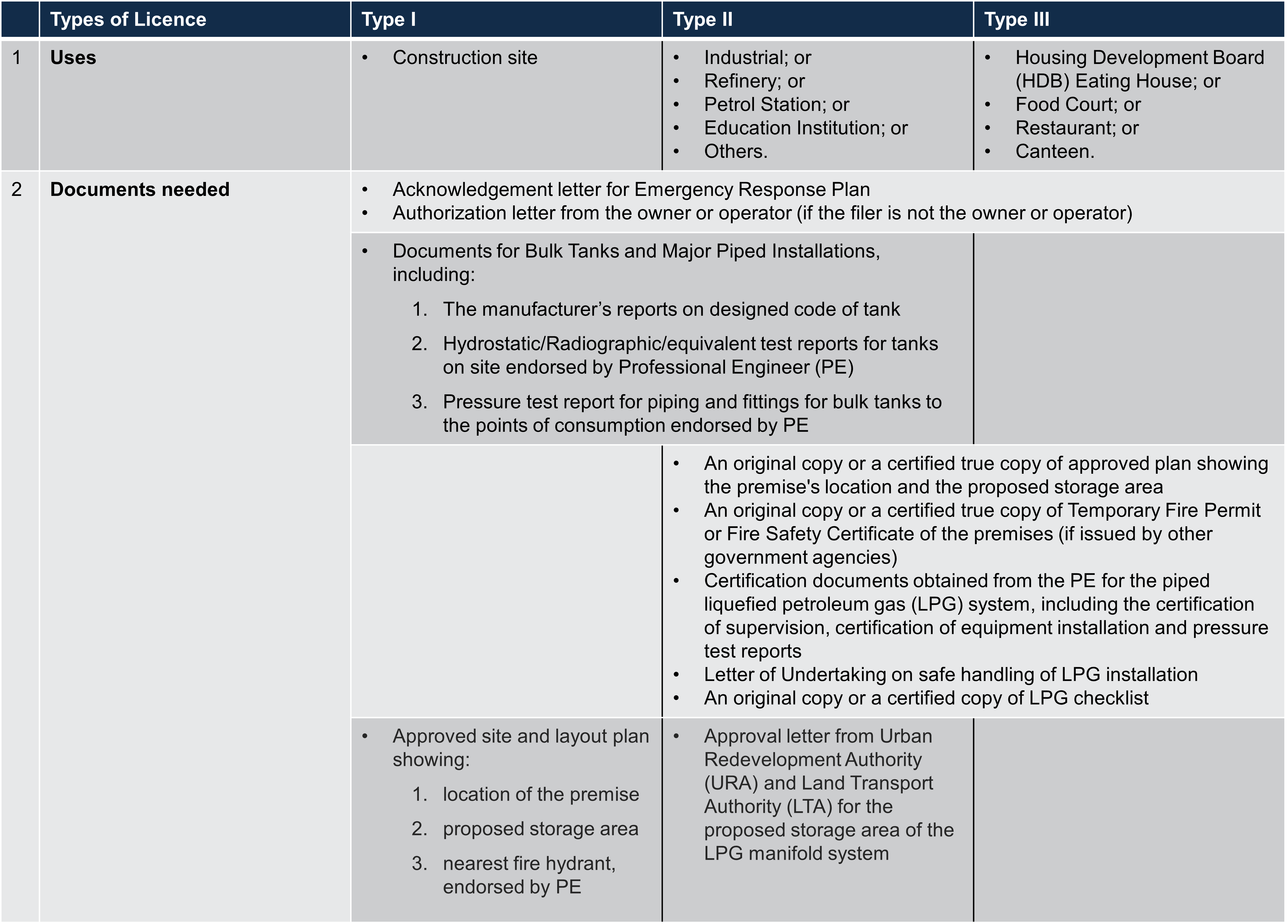
¶ Transport LicenceA transport licence is needed for a vehicle used to transport P&FM. The transportation of P&FM needs to be undertaken within approved hours along approved routes. The application can be submitted online via SCDF e-Services or directly through LicenceOne Homepage. The applicant will be notified through email on the approval of the application. Upon receipt of the SCDF acknowledgement letter, the applicant is then required to make payment online. The licence is valid for either 1 or 2 years, depending on the decision made by the applicant. The documents to be submitted depend on the types of transportation: 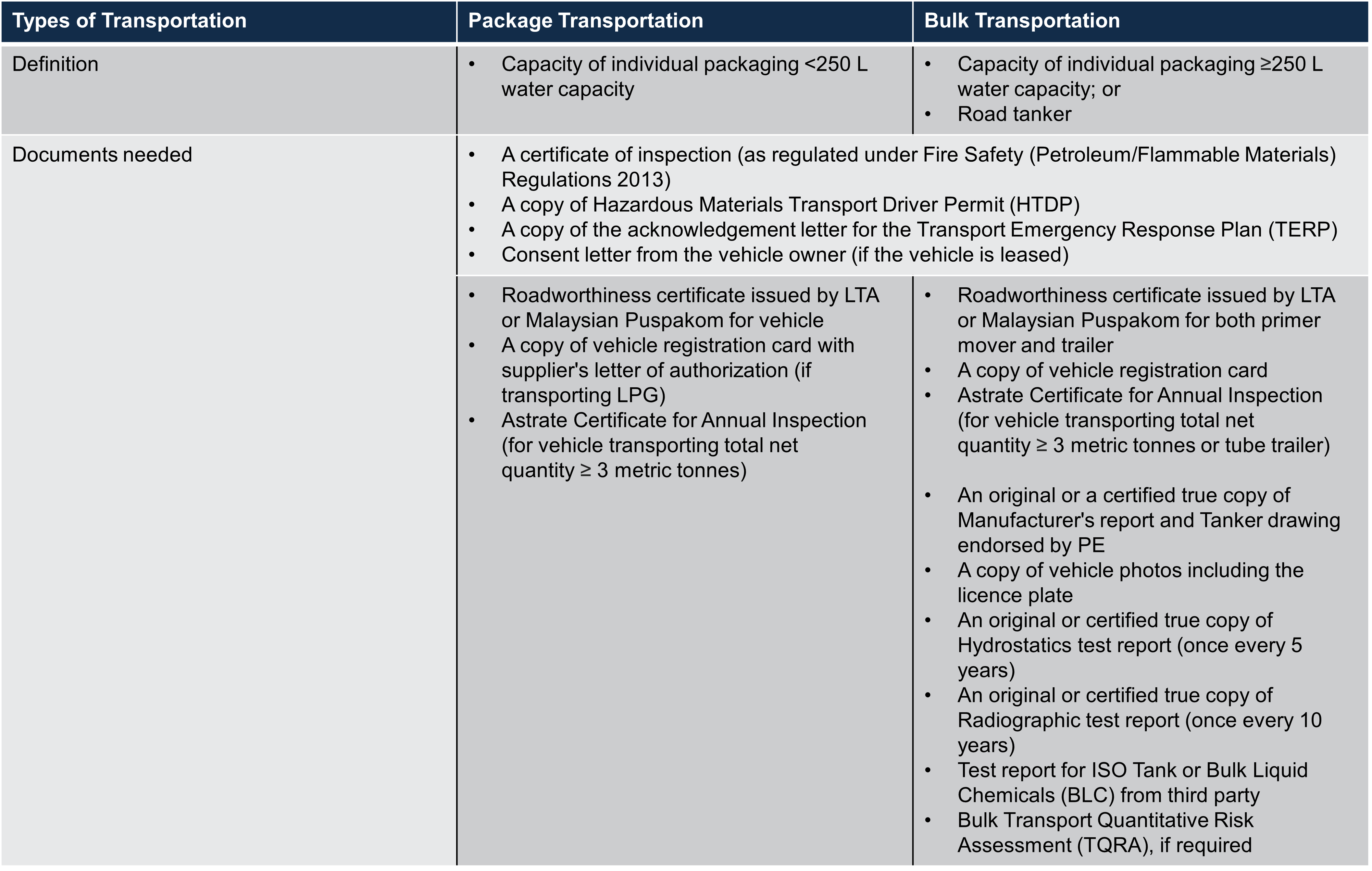 The applicant may refer to the P&FM Transport Checklist for more detailed requirements for the types of transport. However, the following are exempted from transport licensing:
¶ Pipeline LicenceA pipeline licence is required for the conveyance work of P&FM in the pipeline outside of the premises boundaries. The application of import licence can be submitted online via SCDF e-Services. Upon successful application, a licence will be issued with a validity period of 1 year. The following documents are required for the new licence application:
¶ Product ExemptionsThe following products are exempt from the Fire Safety Act:
|
Sources
Resources
|
¶ Drugs¶ Controlled DrugsThe Misuse of Drugs Act is the main legislation for regulating the manufacture, supply, and possession of drugs in Singapore. It applies to all of the controlled drugs (defined under the First Schedule), including all narcotic drugs under the 1961 United Nations Single Convention on Narcotic Drugs, and some of the psychotropic substances under the 1971 United Nations Convention on Psychotropic Substances. Health Sciences Authority (HSA) is the responsible authority for approving the import and export licences of controlled drugs, as well as submitting statistical reports to the International Narcotics Control Board (INCB). Under certain requirements, some controlled drugs are exempt from the prohibition on importation, exportation, and possession, as listed in the First Schedule of the Misuse of Drugs Regulations. In addition to the controlled drugs, the Misuse of Drugs Act also exerts control on the precursor chemicals used in the manufacture of controlled drugs. These precursors are listed in the Third Schedule of the Act. The act was amended on Jul 20, 1998 as the consequence of Singapore’s accession to the 1988 United Nations Convention against Illicit Traffic in Narcotic Drugs and Psychotropic Substances. Not only limited to the manufacture, supply and possession, the act also regulates the import, export, and transshipment of precursor chemicals. Currently, 24 controlled substances are identified by INCB, which is in charge of implementing the 1988 Convention. Under the Misuse of Drugs Act, a licence/permit is required prior to manufacture, supply, possession, import, export or transshipment of any of the controlled drugs and/or controlled substances. ¶ Applying for LicencesThe application of different licences can be done online via Pharmaceutical Regulatory Information System (PRISM). The step-by-step application guide is available from the e-services. There are three types of licences: Import/Export Licence An Import or Export Licence would be required from HSA if a company/organization/institution wishes to import or export controlled drugs for legitimate and authorized use. The applicant should be a registered pharmacist in the company who holds a valid poisons licence, and also has the overall responsibility for the import or export, use, storage, security, sale and supply of controlled drugs. After an assessment on the purposes of the import or export of controlled drugs is performed, the licence will be issued per consignment basis. The consignment should then be imported or exported within 6 months from the date of the licence issuance. Controlled Drugs Wholesale Licence Companies engaging in the supply, distribution and wholesale activities of controlled drugs must apply to HSA Health Products Regulation Group (HPRG) for the Controlled Drugs Wholesale Licence. A licence will be issued to a registered pharmacist appointed by the company, who will be responsible for the wholesale activities of the controlled drugs listed in the licence. Controlled Drugs Manufacturing Licence A Controlled Drugs Manufacturing Licence is required when a company intends to manufacture preparations containing controlled drugs. The applicant must be a registered pharmacist, who should be appointed to supervise the production, Quality Control (QC) activities and the security of the controlled drugs handled in the manufacturing premises.
¶ Controlled Substances (Precursors)¶ Applying for PermitsTraders shall declare to the Central Narcotics Bureau (CNB) via TradeNet 14 days prior to the effective date of import, export, or transshipment if they intend to carry out the aforementioned activities. The following supporting documents are required for the permit application:
For more information, please refer to the CNB Precursor Control page. |
Sources Resources
Licensing Fees Contact Information Central Narcotics Bureau |
¶ Explosives and Explosive PrecursorsSingapore's Guns, Explosives and Weapons Control Act 2021 (previously the Arms and Explosives Act) regulates the manufacture, use, sale, storage, transport, import, export, and possession of arms, explosives, explosive precursors, weapons and noxious substances. The Singapore Police Force was designated as the National Authority for enforcing the Act. Under the Act, a person is required to apply for the appropriate type of licence if he/she possesses, imports, exports, manufactures or deals with any gun, arms, explosives, poisonous/noxious gas/noxious substance and/or naval/military stores (only for export purposes). The application can be done online via Singapore Police Force e-services. The application process generally takes 30 days from the receipt of the application, processing fee and the required supporting documents. Explosives and explosive precursors management requirements are further specified in the following subsidiary rules:
"Explosive precursors" refers to any substances specified in the Second Schedule of the Guns, Explosives and Weapons Control Act 2021, which could be converted into explosives and have the potential to be used as hazardous materials for terrorist purposes. A list of 15 explosive precursors to be controlled has been identified and requires a license to deal in, manufacture, possess and/or store them. The application fees are listed in the Third Schedule of the Guns, Explosives and Weapons Control (Explosives and Explosive Precursors) Regulations 2025.
¶ Validity of Each LicenseUnder the new Act, most licences are now valid for 3 years. These licences can be renewed, starting from 4 months to at least 30 days before the expiry date. For transport licence, the applicant can choose between a renewable one valid for 3 years or a non-renewable one approved for each consignment on a specific date.
¶ Documents Submission GuideThe applicant has to submit an electronic application via the GoBusiness webpage. The following documents must be uploaded for all licence types:
Other supporting documents required for each specific licence can be found on the guidelines. |
Sources
Resources Submit to: Police Regulatory Department (PRD) 391 New Bridge Road #02-701 |
¶ Chemical WeaponsThe Chemical Weapons (Prohibition) Act (CWPA) was enacted with the objective of providing the Singapore Government with the legislative framework required to fulfill Singapore's obligations under the Chemical Weapons Convention (CWC). CWC is an international treaty that prohibits the development, production, stockpiling, transfer, and use of chemical weapons, as well as specifying their timely destruction. Singapore Customs is designated as the National Authority for CWC (NA (CWC)), which administers CWPA and the subsidiary legislations. An NA (CWC) licence is required for authorizing the controlled activities pertaining to the Scheduled Chemicals and Unscheduled Discrete Organic Chemicals (DOCs). Three schedules of the toxic chemicals and their precursors are listed in the Guide to NA (CWC) Licence. ¶ Licence RequirementsAn NA (CWC) license should be applied for at Singapore Customs. Before applying, it is recommended that the applicant first checks whether the chemicals are listed on the list of scheduled chemicals and/or unscheduled DOCs; and whether the activities involved fall under the list of controlled activities. The application process will take no more than 7 working days, and there may be a pre-licence inspection at the facility prior to the approval. The licence is valid until the end of a calendar year regardless of the date of application. The requirements vary depending on the types of chemicals involved:
An NA (CWC) licence is required no later than 14 working days before the commencement of any one or more of the following activities:
An NA (CWC) licence is not required in the following events:
In addition to a licence, a permit approval needs to be applied for through TradeNet when importing and/or exporting any Schedules 1, 2 or 3 chemical. An advanced notification is also needed for a person who wishes to import, export or locally transfer any Schedule 1 chemical before and after completing the transfer. 2. Unscheduled Discrete Organic Chemicals (DOCs) An NA (CWC) licence is needed for the production of Discrete Organic Compounds (see Guide to NA (CWC) Licence) that matches the listed criteria: more than 200 tonnes of total DOCs (including both PSF-containing and non PSF-containing) and/or any PSF-containing DOC that exceeds 30 tonnes. The plant sites that solely produce hydrocarbons or explosives by synthesis are exempted from the licence requirement. |
Sources Resources
Apply at: Singapore Customs 55 Newton Road #10-01 Fax: (65) 6775 5946 |
¶ Restrictions and Bans |
|
¶ Ozone Depleting SubstancesOzone depleting substances (ODS) are controlled as hazardous substances under the Environmental Protection and Management Act (EPMA) and the Environmental Protection and Management (Ozone Depleting Substances) Regulations. ODS have the potential to destroy the protective ozone layer in the atmosphere and hence their production, use and sale is restricted. The control of ODS comes under the purview of the Pollution Control Department (PCD) of National Environment Agency (NEA). The Ministry of the Environment and Water Resources (MEWR) is responsible for formulating strategies and policies to control the use of ODS in industries. On January 5, 1989, Singapore became a party to the Montreal Protocol to signify the commitment to reduce consumption of ODS and protect the ozone layer. On March 2, 1993, Singapore also acceded to the 1990 London Amendment to the Montreal Protocol and subsequently to the Copenhagen Amendment and the Montreal Amendment on September 22, 2000. The specific phase out dates for Singapore for certain ozone depletors are outlined below:
¶ Licence to Import and Export Controlled ODSA licence is required for the import and export of ODS listed in the Schedule of Environmental Protection and Management (Ozone Depleting Substances) Regulations. Applications for Hazardous Substances (ODS) Licences can be submitted online, which will be valid for one year. Reference can be made to the Guidance Notes as the guideline for the application.
¶ Declarations and Re-Debit Authorisation Form for Local Transaction between Importers and ExportersIf a company representative intends to purchase controlled ODS from local importers for export purpose, he or she has to first declare the intended transaction to PCD prior to export. Such transaction shall be made in the Declaration by Licensed Exporter of Controlled Ozone Depleting Substances (ODS) form. For importers who wish to sell controlled ODS to another company for export, such transaction shall be declared in a Re-Export Debit Authorisation of Controlled Ozone Depleting Substances (ODS) form.
|
Sources
Resources
Contact Information Pollution Control Department, National Environment Agency |
¶ Persistent Organic Pollutants (POPs)Persistent organic pollutants (POPs) are chemicals that resist degradation and can be transported by air, water or other means to remote areas where they have never been used. Their propensity to bio-accumulate in living tissues poses a risk to the well-being of human populations and wildlives. Scientific evidence has revealed that exposure to very low dose of certain POPs can result in cancer, human nervous system damage, immune diseases, reproductive disorders and interference with normal infant and child development. On May 23, 2001, Singapore signed the Stockholm Convention together with 90 other countries. The Stockholm Convention aims to gather measures and international cooperation to control the production, use, trade and disposal of POPs. The 12 POPs initially covered under the Stockholm Convention are listed below:
Over the years, the Stockholm Convention has expanded the list to include new POPs, which can be found here. To date, there is no specific legislation implemented in Singapore to enforce the control on these POPs. Many of these POPs, which are commonly used as pesticides, have been banned in Singapore. POPs such as Dioxins and Furans are generated unintentionally as the combustion by-products (such as from the waste incineration process), in which measures have been put in place to reduce their emissions in Singapore. |
Sources |
¶ Restriction of Hazardous Substances (RoHS)On June 1, 2017, National Environment Agency (NEA) started the control on Singapore Restriction of Hazardous Substances (SG-RoHS), which is adapted from EU-RoHS Directive, Directive 2011/65/EU (recently amended by Directive EU 2015/863). It aims to minimize the environmental impact of Waste Electrical and Electronic Equipment (EEE) at the end of the life cycle, by restricting the presence of 6 hazardous substances used to manufacture EEE. This will in turn reduce the contamination of Semakau Landfill caused by the heavy metals in the incineration ash and increase the potential recyclability of the incineration ash. Second Schedule of the Environmental Protection and Management Act (EPMA) was amended on June 1, 2016 to include the regulatory control on these 6 restricted hazardous substances. A one-year transition period was allowed before the controls came into effect from June 1, 2017 onwards. The regulatory control enforced is summarised as below: 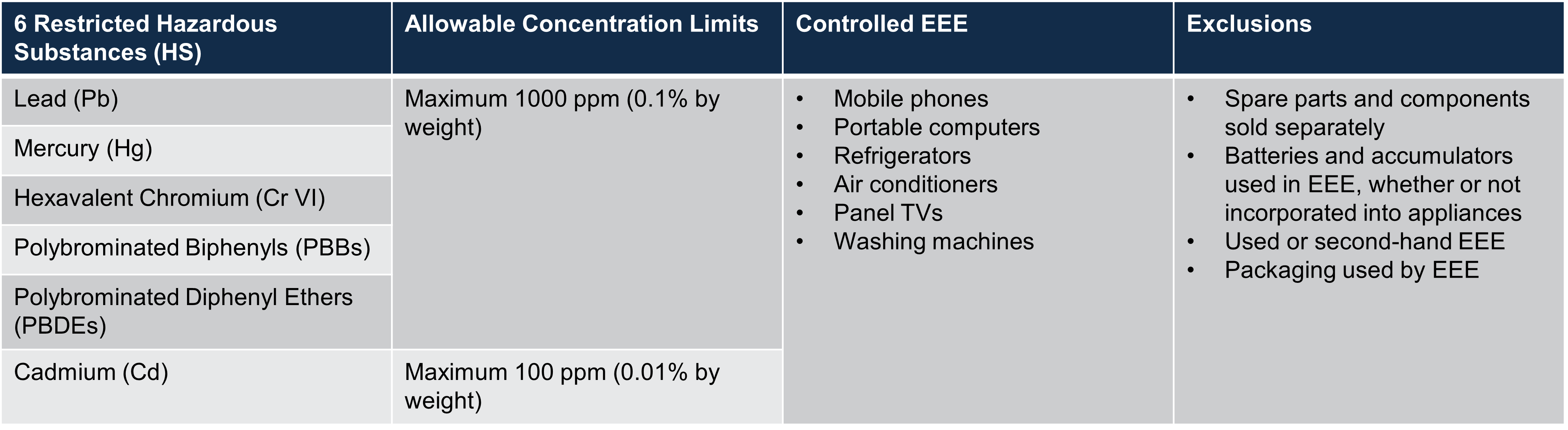 For the controlled EEE imported into or manufactured in Singapore prior to June 1, 2017, SG-RoHS will not be applicable. These EEE may continue to be marketed until the existing stocks are depleted. On the other hand, for the controlled EEE imported into or manufactured in Singapore after June 1, 2017, and are found to be non-compliant with SG-RoHS, a HS Licence/Permit would be required. For more information on the application process, please refer to the Hazardous Substances page.
¶ Comparison between Sg-RoHS and EU-RoHSThe comparison below is made between Sg-RoHS and Directive 2011/65/EU (amended by Directive EU 2015/863): 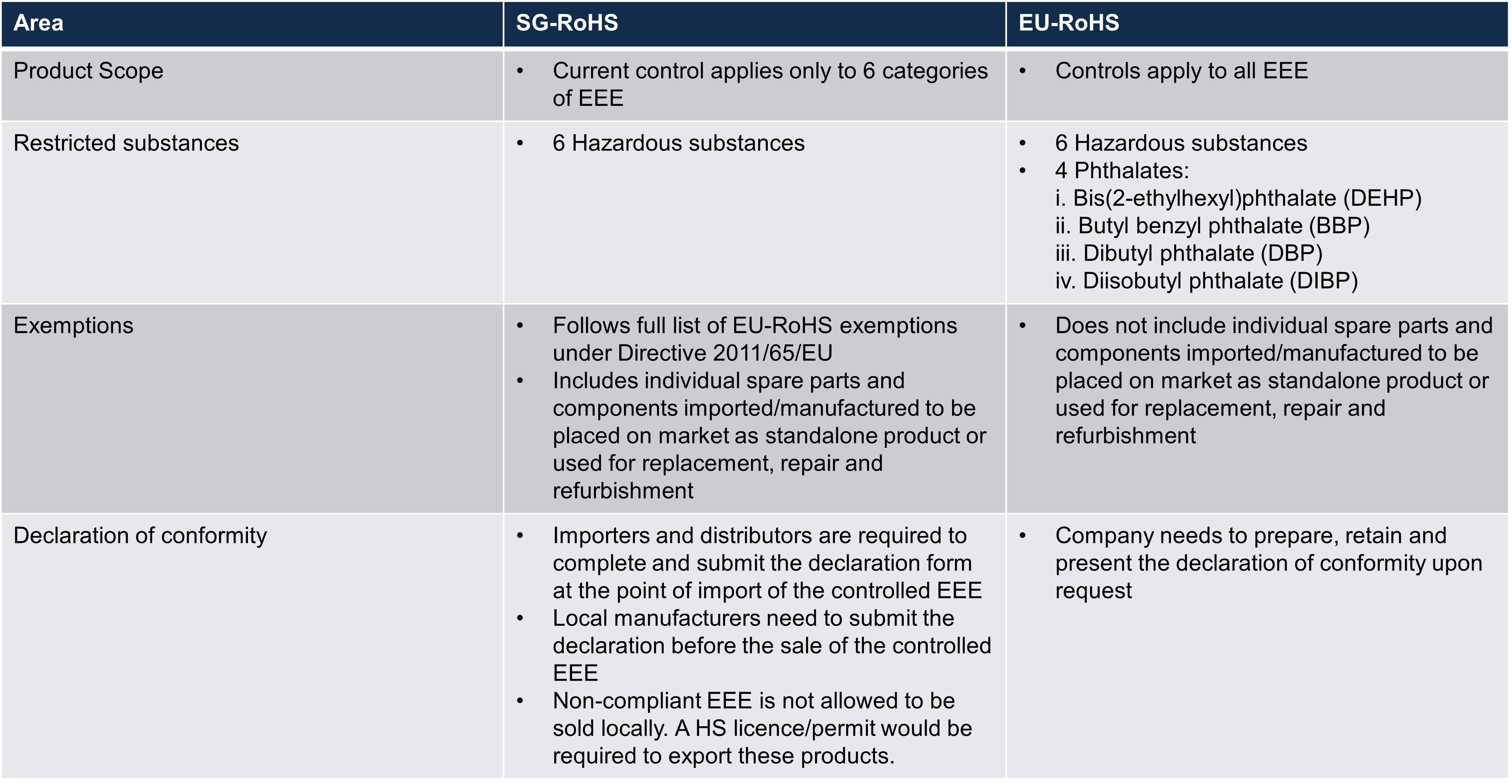 |
Sources Resources Contact Pollution Control Department, National Environment Agency |
¶ SDS + Label |
|
¶ ClassificationIn addition to the legislative requirements found in the Workplace Safety and Health Act and accompanying regulations, Singapore has published guidance documents to aid compliance through national standards. Previously, Singapore provided CP 98: 2003 "Preparation and use of Material Safety Data Sheets (MSDS)" and SS 286: 1984 "Caution labelling for hazardous substances" to regulate the hazard communication system. For the implementation of GHS in Singapore, SS 586: 2008 "Hazard Communication for Hazardous Chemicals and Dangerous Goods" was issued to replace SS 286 and CP 98. SS 586 contains three parts:
Parts 2 and 3 provide guidance for the implementation of the GHS of Classification and Labelling of Chemicals and Preparation of Safety Data Sheets in Singapore by providing information on hazard communication elements such as SDSs and labels. SS 586: 2008 was prepared with reference made to GHS Purple Book, revision 2, published by the United Nations. On February 7, 2014, the Singapore Chemical Standards Committee approved Standard SS 586: 2014 "Specification for hazard communication for hazardous chemicals and dangerous goods", which is a revision of SS 586: 2008 according to the UN GHS Revision 4. Parts 1 and 2 of SS 586: 2008 were revised to form SS 586-1: 2014 and SS 586-2: 2014, respectively, while Part 3 was amended. The revision included an update on the requirements, transport emergency information panel, storage emergency information panel (Part 1), and a new section on Singapore's decision on the generic concentration limits for some hazard classes, specific requirements on labelling on containers and in workplaces, and training requirements (Part 2). For Part 3, the amendment included an update to the GHS label elements in Section 2 for SDSs, and cut-off value for the Hazard Class and Category: Hazardous to ozone layer and Asphyxiation hazard (Category 1) respectively, due to the adoption of GHS Rev 4. GHS SDSs and labeling are required for all of hazardous substances/mixtures beginning June 30, 2016. On February 6, 2023, the new SS 586: 2022 (Part 2 and 3) were released and transitioned from the 2014 version. The transition period for companies to comply is up to 24 months (i.e., February 2025), but the Ministry of Manpower encourages companies to adopt the revised standards as soon as possible. The new parts aligned with GHS Rev 7. In anticipation of the introduction and implementation of the GHS in Singapore, the relevant legislations administered by the various competent authorities, i.e., Environmental Protection and Management Act (EPMA) and related Regulations (National Environment Agency), Workplace Safety and Health Act 2006 and subsidiary legislations (Ministry of Manpower), Arms and Explosive Act (Singapore Police Force) and Fire Safety (Petroleum and Flammable Materials) Regulations (Singapore Civil Defence Force) have been amended to align with the GHS. Under the Workplace Safety and Health Act, Fifth Schedule, Part II, the following endpoints are to be considered to determine whether a material is to be classified as a hazardous substance. Endpoints
For each of these endpoints, a chemical is assigned a hazard class according to its hazard nature and a hazard category according to its hazard severity. A hazard category within a hazard class is a building block. The GHS building blocks adopted by Singapore are specified below:
|
Sources
Resources |
¶ Cut-off Values/Concentration LimitsWhere test data is not available for a mixture, for health and environmental endpoints, the GHS allows for classification based on the hazards of the substances in the mixture. The GHS usually defines the concentration at which a hazardous substance causes a mixture containing that substance to be classified, for most hazards. These are known as Concentration limits / Cut-off values. Countries must additionally set the thresholds for mixture classification for certain hazards:
Singapore is implementing specific classification cut-off values and concentration limits for mixtures for certain hazard classes, as shown below.
¶ SensitizationRespiratory Sensitization S/L: Solid/Liquid 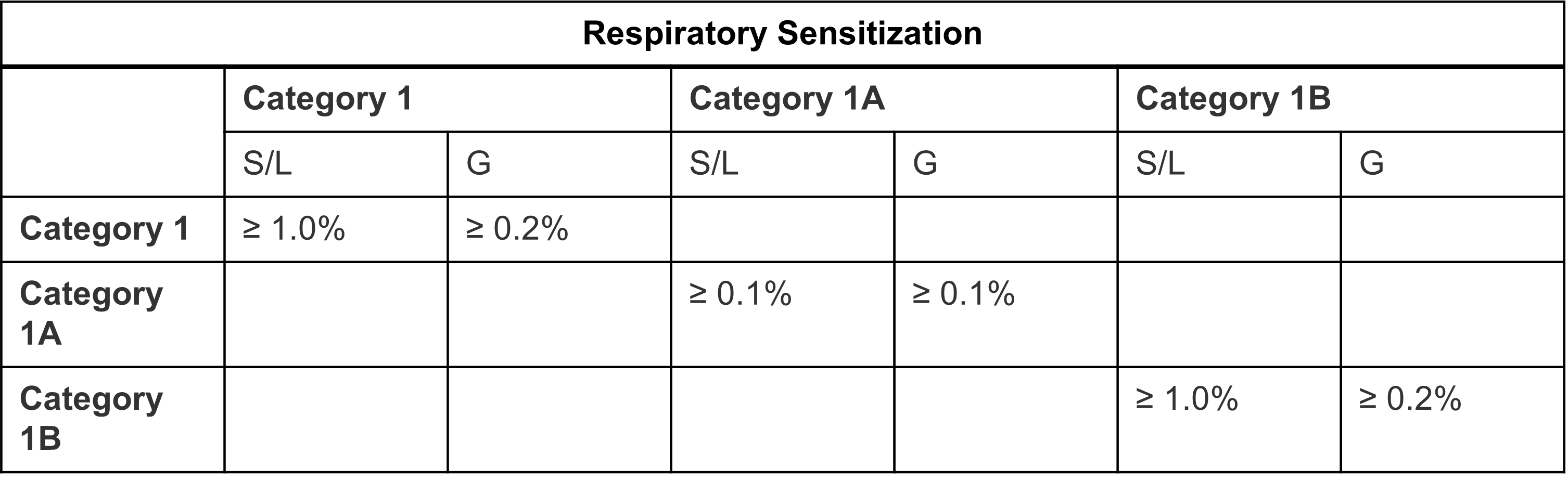 When a respiratory sensitizer is present in the mixture at ≥ 0.1%, an SDS is required. NOTE: Respiratory Sensitizer Cat 1 is not required to be sub-categorised into Category 1A and 1B.
Skin Sensitization 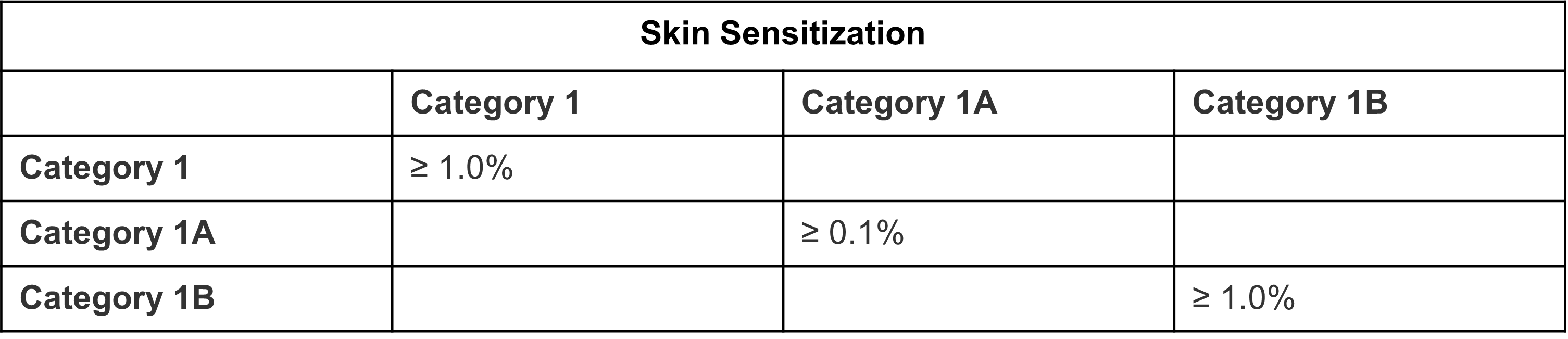 When a skin sensitizer is present in the mixture at ≥ 0.1%, an SDS is required. NOTE: Skin Sensitizer Cat 1 is not required to be sub-categorised into Category 1A and 1B.
¶ Carcinogenicity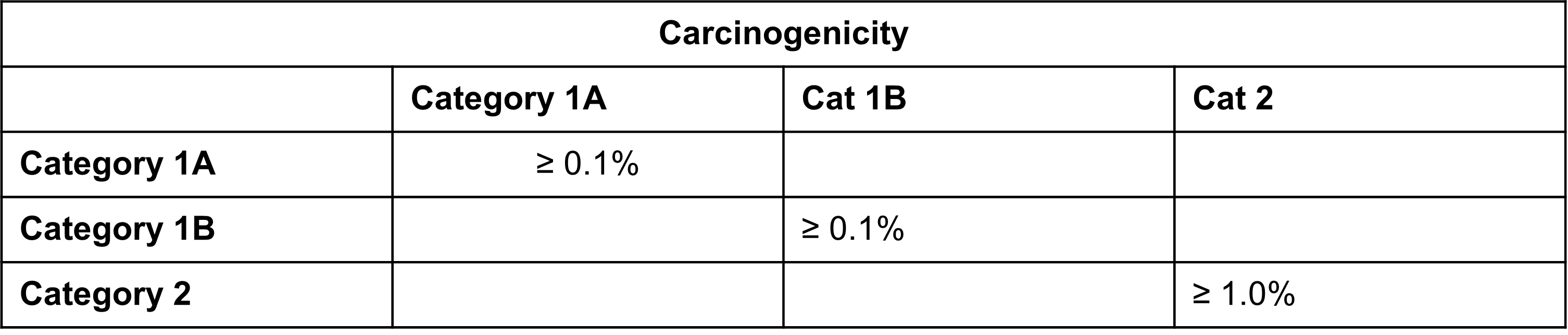 When a carcinogen is present at ≥ 0.1%, an SDS is required.
¶ Reproductive Toxicity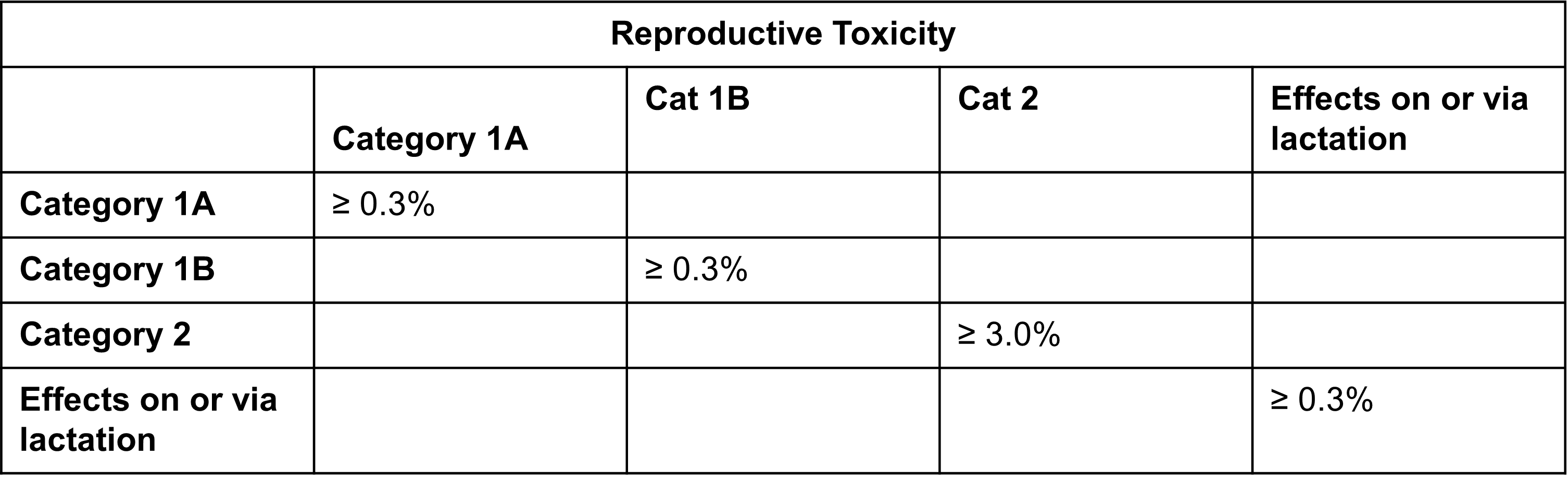 When a reproductive toxicant is present in the mixture at ≥ 0.1%, an SDS is required.
¶ Specific Target Organ Toxicity - Single Exposure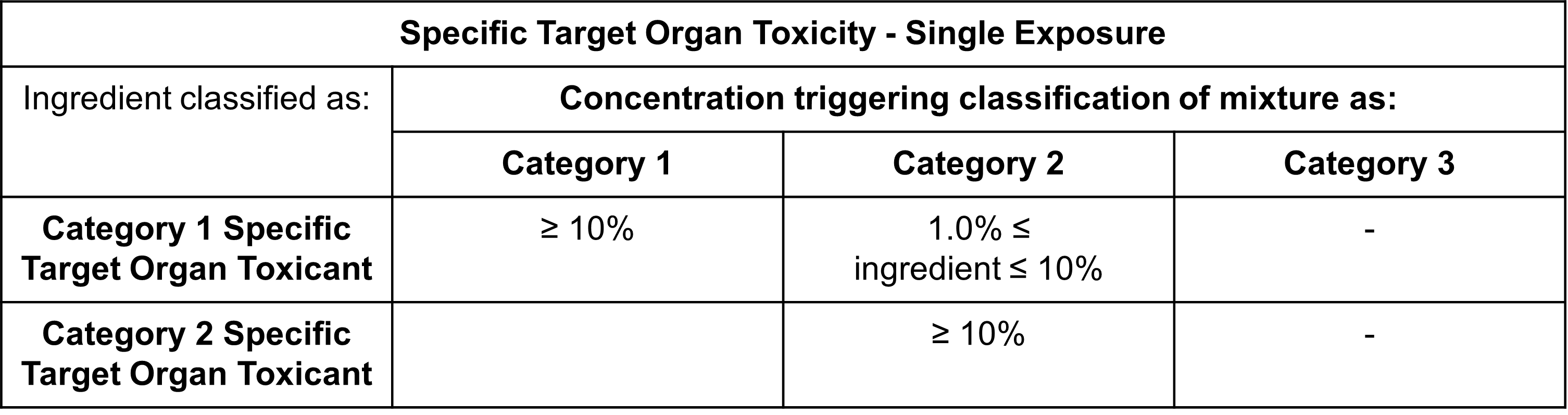 When a Category 2 STOT-SE is present in the mixture at ≥ 1.0%, an SDS is required.
¶ Specific Target Organ Toxicity - Repeated Exposure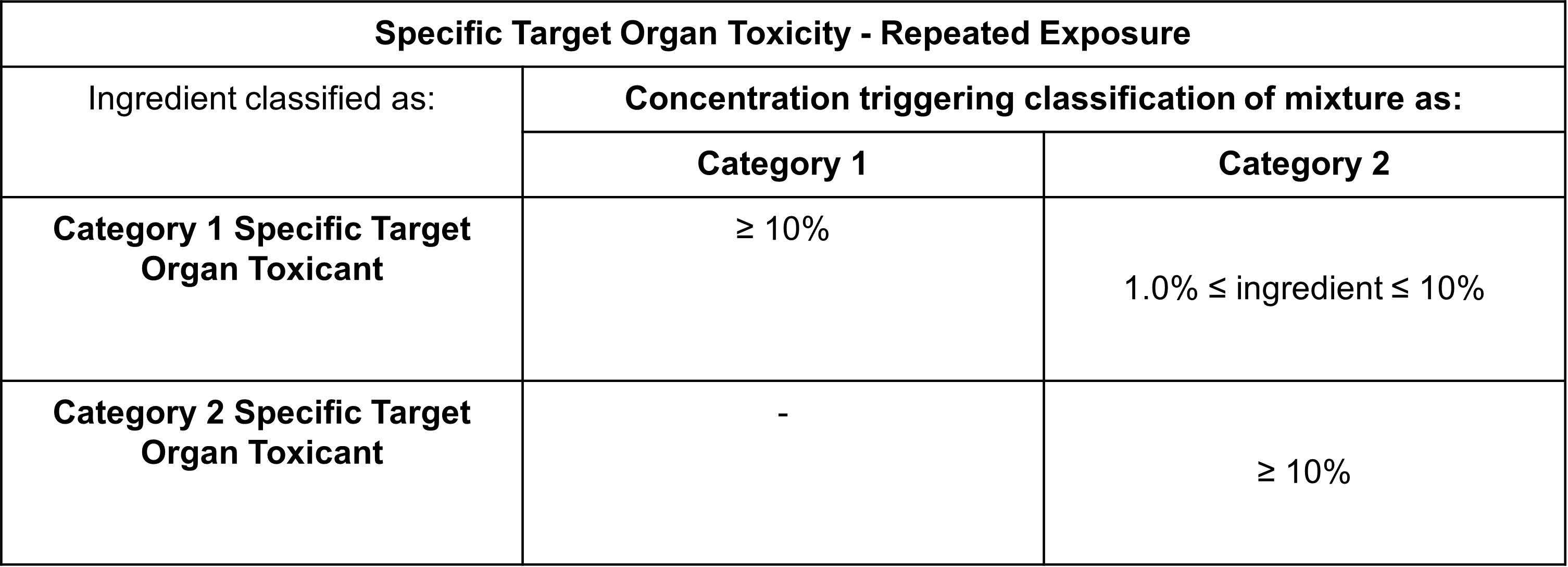 When a Category 2 STOT-RE is present in the mixture at ≥ 1.0%, an SDS is required. |
|
¶ Safety Data Sheets (SDS)Sections of the Safety Data Sheet Workplace Safety and Health (General Provisions) Regulations mandates the provision of SDS for hazardous substances (Regulation 43). "Substance" means chemical element and their compounds in the natural state or obtained by any production process; while "mixture" means a mixture or solution composed of two or more substances in which they do not react. The word mixture and preparation have the same meaning and the word mixture is used in Singapore. In Singapore GHS, "shall" indicates a statement is mandatory and "should" indicates a recommendation. In Singapore, an SDS shall be prepared for all substances and mixtures that are classified in any of the hazard classes and categories listed in SS 586: Part 2, Table 1, 2 and 3: GHS building blocks adopted in Singapore. Also, an SDS shall be prepared for all mixtures which contain any ingredient meeting the criteria for sensitizers, mutagenicity, carcinogenicity, reproductive toxicity or specific target organ toxicity (single or repeated exposure) in concentrations exceeding the cut-off limits. For all the mixtures containing any ingredient that is classified in any other hazard classes and categories with the concentration above the cut-off values, an SDS should be prepared. Singapore SDSs need to be written in English. Suppliers should review a SDS at least every 5 years. Cut-off values/concentration limits for each health and environmental hazard class: 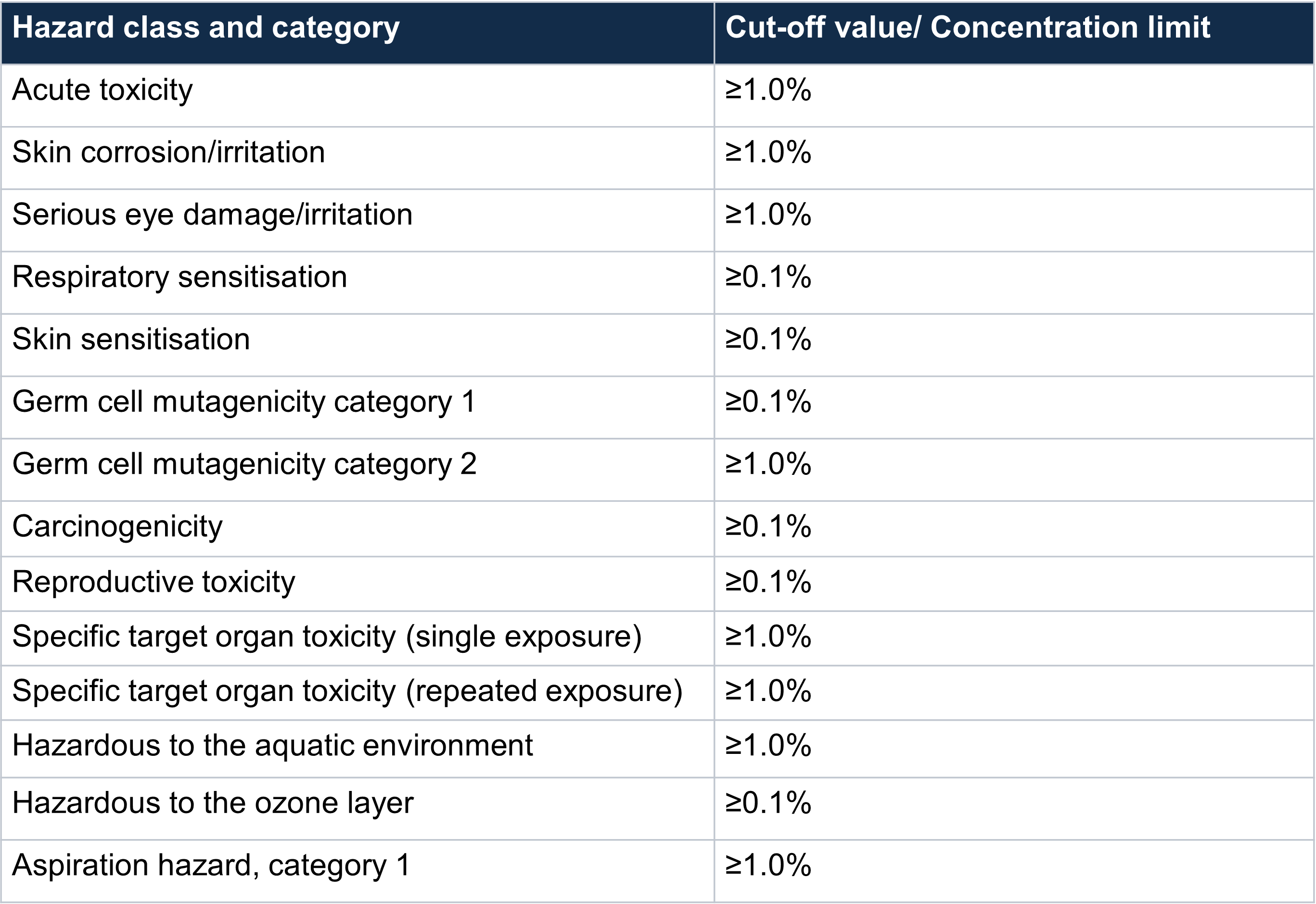 There is a list of SDS exemptions criteria published as below:
|
Sources
Resources |
¶ LabelLabelling via the use of a pre-assigned pictogram, signal word, and hazard and precautionary statements, is required to inform the intended users about each of the hazard classes and categories. The label elements and other information required on a GHS label shall include:
Under the Workplace Safety and Health (General Provisions) Regulations, Regulation 42 (Warning Labels) stipulates that
Regulation 44 exempts the use, handling or storage in a workplace, or the sale for use in a workplace, of any hazardous substance that is in a consumer package and that is intended for retail sale, from labelling and SDS requirements. However, chemical substances or mixtures are not exempted from GHS, except for those which have been classified as non-hazardous under GHS hazard classification criteria, and do not contain any hazardous ingredients exceeding the SDS cut-off limits listed in SS 586. GHS labelling requirements do not apply to the pharmaceuticals, food additives, cosmetics and pesticide residues in food at the point of intentional intake, but they are covered for the products affecting the workers in the workplace and transport. The Environmental Protection and Management (Hazardous Substances) Regulations requires that the appropriate hazard warning panel or label shall be placed on the road tanker, freight container, tank container or other vehicle, which carry hazardous substances listed in the Schedule of the Regulations. The Fire Safety (Petroleum and Flammable Materials) Regulations requires that the emergency information panels or warning labels shall be used on every container, tank, road tanker, freight container, or other vehicle used to store or transport any petroleum and flammable materials. The following table specifies the dimensions requirement for the label to be provided by manufacturers or suppliers: 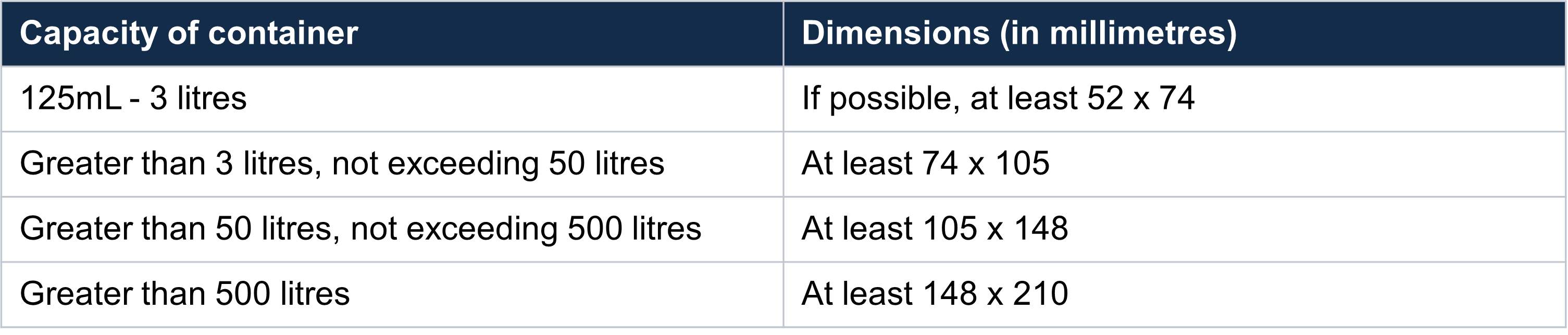 The labels are to be updated within six months whenever there is any new information received on the label information items. Information on the label is to be reviewed by the supplier every five years. In additions, a reduced workplace label with only product identifier and GHS pictograms may be provided in the following circumstances:
|
Sources
|
¶ Trade SecretsSingapore requires the disclosure of all the ingredients determined to be hazardous. However, under certain conditions, non-disclosure of Confidential Business Information (CBI) may be permitted and are subject to the CBI provisions in Singapore, but such provisions should not compromise the health and safety of employees or consumers, or the protection of the environment. Singapore SDSs require disclosure of as much ingredient information as possible. For information otherwise required on labels and SDSs, CBI claims should be limited to the names of chemicals and their concentration in mixtures. A generic name may be used for the protection of CBI, which should describe the functionality of the ingredient, substance or polymer which contributes to the hazard. Where generic names are used, the CAS number information could be excluded. In SS 586, there is also a guidance for selection of generic names, which is based on the procedure for naming hazardous substances, EU Directive 1999/45/EC, Annex VI, part B. Companies/Applicants can find the legislation information on the website of European Union law. Under the EU CLP Regulation (EU GHS), a manufacturer or importer has to prepare and submit an IUCLID5 dossier to apply for an alternative name and claim confidentiality. However, in Singapore there is currently no such requirement. Important note A claim of CBI cannot be made for certain ingredients that are present in a quantity exceeding the cut-off level. This includes:
|
Sources |
¶ Occupational Exposure LimitsEffective March 1, 2006, the Workplace Safety and Health Act (WSHA) was administered by the Commissioner for Workplace Safety and Health and replaced the Factories Act. The act was then successfully extended to all of the workplaces from September 11, 2011. It covers the high-risk industries, including factories, shipyards and construction worksites, which were previously protected under the Factories Act. Under the act, the companies and employees are responsible for the workplace safety, and measures to be taken include proper risk management and identification, in order to prevent work incidents. One of the subsidiary legislation under WSHA, Workplace Safety and Health (General Provisions) Regulations, regulates strictly on the hazardous chemicals. It requires them to be managed by a competent personnel who has the sufficient knowledge on the properties and dangers posed by them. All practicable measures and regular monitoring have to be taken to ensure that no person at the workplace is exposed to the toxic substances in excess of the permissible exposure levels (PELs) as listed in the First Schedule. In the Workplace Safety and Health (General Provisions) Regulations, PELs is defined as the maximum time weighted average (TWA) concentration of a toxic substance to which any person may be exposed. There are two types of PELs specified in the First Schedule:
To access the risks of exposure and determine the compliance with PELs, the sample(s) is to be collected over the period as defined by the exposure standards and the air sampling or concentration measurements are used to be compared with the PELs. For more information, please refer to Singapore Ministry of Manpower (MOM) Guidelines on Sampling Strategy and Submission of Toxic Substances Monitoring Report. |
Sources Resources |
¶ Transport |
|
|
The Singapore Civil Defense Force is responsible for SS586-1:2021, Specification for hazard communication for hazardous chemicals and dangerous goods - Part 1 : Transport and storage of dangerous goods. This standard is is based on the 20th Revision of the United Nations Recommendations on the Transport of Dangerous Goods.
|
Sources
Resources |