¶ Background |
|
|
Saudi Arabia adopts regulations from different parts of the world and modifies them to fit its own needs. Saudi Arabia is also part of the Gulf Cooperation Council (GCC), which consists of six different Arab member states: the United Arab Emirates, Saudi Arabia, Bahrain, Oman, Qatar, and Kuwait (more information available at www.gcc-sg.org). The GCC member states have also adopted some of the EU Regulations and formats. Most regulations adopted after the year 2000 are available in both English and Arabic. The GCC headquarters is in Riyadh (Saudi Arabia's capital). The official Gazette (Saudi Gazette) is available at http://saudigazette.com.sa/. New regulations and decrees are published in the Gazette. Responsible ministries also reproduce the legislation on their websites. The General Authority of Meteorology and Environmental Protection (PME) (https://www.pme.gov.sa/ar/Pages/default.aspx) sets guidelines used for the management and control of hazardous chemicals in Saudi Arabia. The Royal Commission for Jubail and Yanbu (https://www.rcjy.gov.sa/en-US/Pages/default.aspx) - which was established on September 21, 1975 - helps set other guidelines to protect the environment from petrochemicals. |
Official Gazette |
¶ Inventories |
|
| Saudi Arabia does not currently have any inventories. | |
¶ Substance Registration |
|
|
Saudi Arabia does not require registration of any chemical substance. However, a permit to trade hazardous materials within the country is required for import. This permit is required when importing chemical substances or products. The permits have to be gathered by the importer of record from the following ministries depending on the chemicals imported: 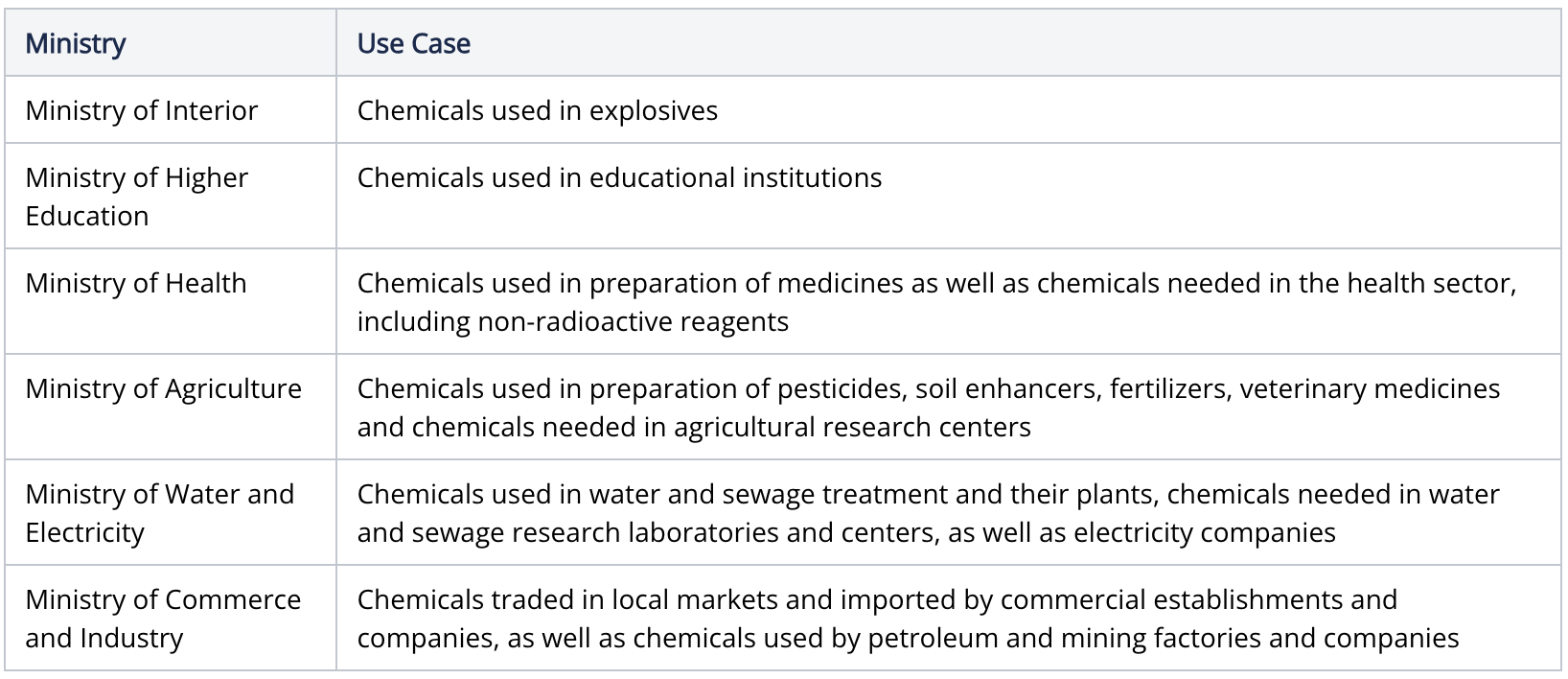 When manufacturing in the country, the Ministry requires additional information specific to Saudi companies with Saudi addresses.
|
Sources |
¶ Product Registration |
|
¶ Hazardous Material PermitSaudi Arabia requires a permit for trading Hazardous Materials. This license is required when importing chemical substances or products. Full details are available in the Substance Registration section.
|
|
¶ Cosmetics¶ Cosmetics in the GCCSimilar to other regions in the Middle East, the GCC uses the EU Regulation 1223/2009 as a basis for their cosmetics regulatory framework - GSO 1943/2016 Safety Requirements Of Cosmetics And Personal Care Products. GSO 1943/2016 has its own distinctions when it comes to safety requirements and parameters for product claims, as well as labeling and packaging requirements that should be fulfilled by all cosmetics and personal care products. ¶ DefinitionsGCC has 2 distinct cases for cosmetics: Cosmetic: Any substance or mixture intended to be placed in contact with the external parts of the human body (epidermis, hair system, nails, lips and external genital organs) or with the teeth and the mucous membranes of the oral cavity with a view exclusively or mainly to cleaning them, perfuming them, changing their appearance, protecting them, keeping them in good condition or correcting body odors. Halal Cosmetic: Cosmetic product that does not violate the provisions of the Islamic Sharia and which meet the technical requirements referred to in the standards GSO1943 and 2055. ¶ Safety Requirements
¶ Labeling and Packaging
¶ The Halal Cosmetic Requirements
¶ Saudia Arabia's Unified Electronic System DatabaseSaudi Food and Drug Authority (SFDA) takes the responsibility of regulating cosmetic products manufacturing, importation and marketing. Furthermore, SFDA has started issuing the specialized directive and guidelines to ensure cosmetic products’ safety. In consequence, SFDA established an electronic system (eCosma) to regulate cosmetic products relevant processes, it has been replaced with a new program under the SFDA as the Unified Electronic System (Ghad) https://ghad.sfda.gov.sa/en/ A Saudi Arabian designee must be the person responsible for signing up on the website as they require a National ID form to be submitted. The Unified Electronic System (Ghad) is mainly responsible for the configuration of implementation of the regulations over cosmetic manufacturing, importation and marketing processes. It receives the required information and then – if they are compatible with the relevant guidelines- it issues the license and notification certificates. The Ghad system is divided to many sections, these are clearance, domestic manufacture licensing, warehouse licensing, product notification beside issuing GMP certificate for the local manufacture. Fees will be calculated within the software Product Details:
|
Sources |
¶ PesticidesSaudi Arabia follows the Gulf Cooperation Council’s Law of Pesticides of 2015. They require a certificate of registration as well as a license from the MOA for the pesticides. The published list of pesticides includes the restricted and banned pesticides and their main uses. ¶ RegistrationA registration can be made in English or Arabic. To register or re-register a pesticide the following is needed:
¶ LabelingAll pesticides sold in Saudi Arabia are subject to specific label requirements. According to the regulation, pesticide labels must include the following information:
A copy of this label should be sent to the MOA with the application for licensing.
|
Sources *Source not available in English Resources |
¶ Notifications |
|
|
Saudi Arabia does not currently have any notification requirements for chemicals.
|
|
¶ Restrictions and Bans |
|
¶ Ozone Depleting SubstancesSaudi Arabia follows the Gulf Country Council (GCC)'s Unified Guiding Regulation for the Control of Substances that Deplete the Ozone Layer in the GCC Countries. The GCC member states follow the Vienna Convention (1985) and the Montreal Protocol (1987) and its subsequent amendments.The Guiding Regulation contains five annexes, based on the Montreal Protocol and its amendments. Annexes A, B, C, and E are considered "controlled substances" for the purposed of this Regulation. Annex D contains "appliances, equipment, and products that contain or depend for their operation on Ozone Depleting Substances." Import or manufacture of the controlled substances in Annexes A, B, and E (C is excepted), is prohibited in Saudi Arabia. The import/manufacture of products in Annex D is also prohibited, but exceptions may be granted in certain cases when an alternative is not available. A license must be obtained to import and/or export the controlled substances. Application materials include:
Information shall be submitted by an entity in the GCC country or Saudi Arabia to the Concerned Authority. The Concerned Authority must provide the Ozone Secretariat with the volumes used in the state (whether manufactured or imported) within 9 months of the end of the year. Saudi Arabia defines the Concerned Authority (who the submission are sent to) as any ministry, council or government authority concerned with the environmental affairs in the GCC states.
|
Sources |
¶ Persistent Organic Pollutants (POPs)Saudi Arabia signed the Stockholm Convention on March 14, 2002 and ratified the Convention on July 25, 2012. It entered into force on October 23, 2012. They do not have any legislation related to implementing the Stockholm Convention as of yet. However, according to the General Authority of Meteorology and Environmental Protection and The Regional Organization for the Conservation of the Environment of the Red Sea and Gulf of Aden, there has been a collaboration between these two organizations to implement better regulations to control POPs in the region.
|
Resources |
¶ Restriction of Hazardous Substances (RoHS)Technical Regulation for Restriction of Hazardous Substances in Electrical and Electronic Equipment Directive No 179 was published in the Official Gazette September 7, 2021 and deals with the restriction of certain hazardous substances in electrical and electronic equipment (EEE). ¶ ScopeThe electrical and electronic equipment affected are defined under the categories listed in Article 2 of the Decree. Please consult the text of the Directive for specific information on the scope of product coverage. The categories of equipment are:
The following are excluded from the scope of this regulation:
Saudi Arabia's RoHS requirements cover 6 substances. The threshold limits for these substances are identical to the restrictions created by EU RoHS, but notably, limits are not in place for the 4 phthalates covered by EU RoHS. 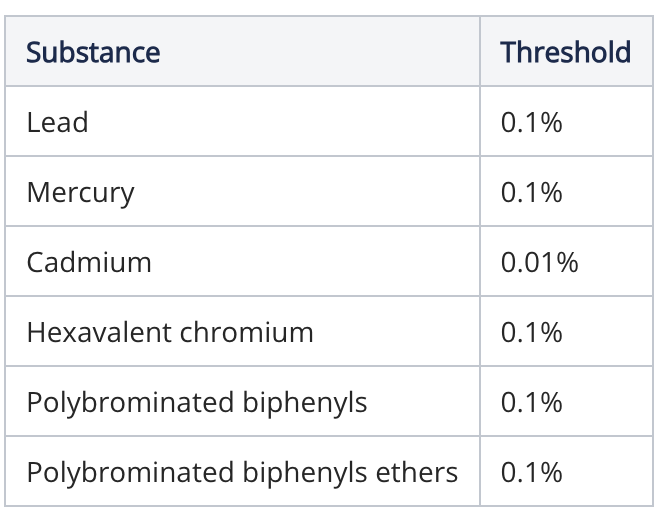
¶ Conformity AssessmentAll suppliers must meet the requirements for the Conformity Assessment Procedures listed out in the regulation, which will be approved by Saudi Arabia Standard Organization (SASO). When submitting for approval, the file should also include the following:
The Supplier must take corrective actions in compliance with this regulation within 180 days of date of publication (September 07, 2021).
|
Sources |
¶ SDS + Label |
|
¶ ClassificationPresently, there is no regulation implementing a classification scheme. The UN GHS is to be used for the SDS and label. Saudi Arabia does not specify terms of implementation, and recommends using EU CLP as best practice. However, a draft has recently been published to specifically address GHS implementation in the GCC countries. ¶ GHS Implementation DraftIn October 2019, the GSO (GCC Standardization Organization) published its first draft (GSO/TC01) for implementing the Globally Harmonized System (GHS) in the GCC countries based on the 5th revision of GHS. The draft is available on the GSO website at https://www.gso.org.sa/en/. The Gulf countries that are members of GCC include Saudi Arabia, United Arab Emirates (UAE), Kuwait, Qatar, Bahrain, and Oman. The implementation will help the competent authorities align more closely with other countries who have fully implemented GHS. The new implementation of the Globally Harmonized System is expected to happen by mid-2020. After the implementation of GHS, there will be a grace period of 2-3 years for the six countries in the GCC to place the new law in their legislation, giving all companies who do business in that region enough time to adjust to the new regulation. The draft liberally refers to the EU CLP as its model thus referencing concepts such as SVHCs and makes the same distinction as CLP between cut-off values and concentration limits. Some key points from the draft:
The draft does state that the legislation will not apply to radioactive substances, non-isolated intermediates, mixtures for scientific research and development, or veterinary products, cosmetic products, food or feeding products. It will not apply for articles either but can be provided for articles on a voluntary basis. |
Navigate to: EU SDS + Label Sources |
¶ Safety Data SheetSaudi Arabia follows the international format for Safety Data Sheets. The SDS can be completed in English and Arabic (depending on the SDS destination). The UN GHS is to be used for the SDS and label. Saudi Arabia has not currently specified terms of implementation, but recommends using EU CLP as best practice. A draft has been published by the GSO that would specify GHS implementation in GCC countries. Currently there is no mandatory requirement for an emergency 24 hour phone number other than the company contact phone number.
¶ GHS Implementation DraftIn October 2019, the GSO (GCC Standardization Organization) published its first draft (GSO/TC01) for implementing the Globally Harmonized System (GHS) in the GCC countries based on the 5th revision of GHS. According to the draft, Safety Data Sheets will include the standard 16 sections, and will be written in both Arabic and English. The SDS information should be updated regularly and if no new information becomes available they will need to be reviewed once every 3 years at minimum. If it becomes necessary to update the SDS, it should be revised without delay with the revised version of the SDS provided to all who have purchased the product within the preceding 12 months. Read full details about the draft implementation in the Classification section.
|
Navigate to: EU SDS + Label |
¶ LabelThe UN GHS is to be used for the SDS and label. Saudi Arabia has not specified terms of implementation, but recommends using EU CLP as best practice. A draft has been published by the GSO that would specify GHS implementation in GCC countries.
¶ GHS Implementation DraftIn October 2019, the GSO (GCC Standardization Organization) published its first draft (GSO/TC01) for implementing the Globally Harmonized System (GHS) in the GCC countries based on the 5th revision of GHS. According to the draft, labels will be in Arabic and English, with a maximum of 6 precautionary statements on the label, unless it is necessary to include more due to the severity of the hazards of the product. Read full details about the draft implementation in the Classification section. |
Navigate to: EU SDS + Label |
¶ Trade SecretsSaudi Arabia currently makes no provisions for or restrictions on trade secrets. However, a draft GHS implementation has been published for GCC countries that addresses Confidential Business Information. 
|
|
¶ Occupational Exposure LimitsSaudi Arabia follows the Gulf Cooperation Council (GCC) Occupational Exposure Limits (OEL) of 2002. Agencies and facilities are obligated to ensure adequate ventilation in the workplace, and to take precautions and necessary measures to not leak or emit air pollutants, except to the extent permissible by Annex III of this regulation. Occupational Exposure Limits (OELs) are addressed in Annex III of the publication, outlining TWA limits, STELs, Ceiling limits, substances that absorb through the skin, and carcinogens. The limits included in the Supplement are intended as a minimum regulatory value to be upheld by industry in Saudi Arabia.
|
Sources
*Not available in English |
¶ Transport |
|
|
Saudi Arabia does not have their own regulations for the transport of dangerous goods via road. However, they allow use of the European Agreement Concerning the International Carriage of Dangerous Goods by Road (ADR) within the country. See European Union page: Transport |
|