On December 23, 2021, Indonesia published two national standards: SNI 9030-1:2021 Globally harmonized system - Part 1: Chemical hazard classification, and SNI 9030-2:2021 Globally harmonized system - Part 2: Safety data sheets and chemical labeling. More information can be found in Classification.
The Republic of Indonesia is a country located in Southeast Asia. As a member of the Association of Southeast Asian Nations (ASEAN), Indonesia is working closely with other member countries to promote safety and stability in the region. The chemical control legislative bodies in Indonesia include the following:
Under the administration of the Ministry of Industry and Trade, Indonesia has adopted GHS through several regulations:
Ministry of Industry Regulation No. 87/M-IND/PER/9/2009 regarding Globally Harmonized System of Classification and Labelling of Chemicals (amended by Regulation No. 23/M-IND/PER/4/2013 regarding amendment of Ministry of Industry No. 87/M-IND/ PER/9/2009 regarding Globally Harmonized System of Classification and Labelling of Chemicals)
Regulation No. 24/M-IND/PER/5/2006 regarding Control on Production and Usage of Industrial Dangerous Substances
Regulation No. 21/IAK/PER/4/2010 regarding Technical Guidelines for Applications of Globally Harmonized System of Classifications and Labelling of Chemicals
Regulation No. 04/BIM/PER/1/2014 on Technical Guidance and Supervision Instructions on the Implementation of Globally Harmonized System of Classification and Labelling of Chemicals (GHS)
Indonesian Government Regulation No. 74/2001 was enacted on November 26, 2001 to prevent and minimize the risk of hazardous and toxic substances (B3) impacting the living environment or the health of humans and other living creatures. B3 substances are hazardous or toxic substances that can directly or indirectly pollute and/or harm the living environment, or endanger the health and survival of humans and other living creatures due to their nature, concentration, or quantity.
The Regulation controls the manufacture, transport, distribution, storage, use, and disposal of B3 substances. Appendix 1 of the Regulation identifies the permitted B3 substances, while Appendix 2 lists the prohibited and restricted B3 substances.
Article 6 of the Regulation requires each B3 substance to be registered by the producer and/or importer. Registration is required only for first-time production or import. The Registration of B3 substances shall be completed online through the Indonesia PTSP online system. However, it may be done without using the electronic system if the website does not function properly or if the registrants do not have internet access.
The standard operating procedures for the registration of B3 substances are provided by the Ministry of Environment and Forestry Regulation No. P.36/MENLHK/SETJEN/KUM.1/6/2017 Concerning Procedures for Registration and Notification of Hazardous and Toxic Substances. Appendix I of the Regulation provides the hazardous and toxic substance registration form, and Appendix II shows documentation supporting the hazardous and toxic substance registration.
In order to access the PTSP online system, the applicant of B3 registration should apply for an account with the following information:
Deed of incorporation
Trading business permit (SIUP)/Industrial business permit (IUI)/Permanent business license (IUT)
Business Identification Number (NIB)
Tax ID number (NPWP)
A valid power of attorney, if the application is submitted by an authorized representative rather than the company's authorized signatory.
Once the application is approved, the application of B3 registration can be submitted online with the following documents:
B3 registration form
Pictures of warehouse storage
Pictures of packaging
Pictures of storage arrangement
Safety Data Sheet (SDS)
Certificate of Analysis (CoA)
Environmental approval documents (e.g., environmental permit, or equivalent documents, as applicable)
In addition, for the import of B3 substances, the following information needs to be uploaded online:
Notification of Import of Goods (PIB)
Notification of approval letter from the country of origin
Other necessary documents related to B3 registration
The other necessary documents mentioned above include:
For registration of B3 substances used as pesticides and/or active ingredients in pesticides, the applicant shall attach the letter of registration for the trade name of the pesticides.
For registration of B3 substances categorized as ozone depleting substances, the applicant shall attach the letter of recognition as Producer Importers of Ozone Depleting Substances (IP-BPO) or the letter of recognition as Approved Importers of Ozone Depleting Substances (IT-BPO) from the Ministry of Trade.
The registration shall be handled by the Deputy Minister responsible for the management of B3 substances. The Deputy Minister shall issue an electronic B3 registration certificate within 2 working days after receiving the application.
Exemptions
The substances exempted in this regulation include:
Radioactive substances;
Explosives;
Products from mining;
Oil and gas including their products;
Food and drinks including food additives;
Household health supplies;
Cosmetics;
Pharmaceutical preparations;
Narcotics, psychotropic substances, precursor chemicals and other addictive substances;
The Indonesian Ministry of Health Regulation No. 1010/MENKES/PER/XI/2008 on Drug Registration (as amended by Ministry of Health Regulation No. 1120/MENKES/PER/Xll/2008) requires that any medicine to be marketed in Indonesia be registered and obtain a marketing authorization (circulation permit) prior to distribution. Exemptions from the registration requirement include medicines for specific use at a doctor's request, donated medicines, medicines intended for clinical trials, and drug samples for registration purposes.
To keep pace with developments in science and technology and to expand the scope of drug products subject to registration, the Regulation of the Chairperson of the Indonesian Food and Drug Authority (BPOM) No. 24 of 2017 on Criteria and Procedures for Drug Registration was issued on November 24, 2017. The regulation was subsequently amended by the following regulations:
BPOM Regulation No. 15 of 2019 on the Amendment to Regulation of the Chairperson of the Indonesian Food and Drug Authority No. 24 of 2017 on Criteria and Procedures for Drug Registration, issued on July 17, 2019.
BPOM Regulation No. 27 of 2020 on the Second Amendment to Regulation of the Chairperson of the Indonesian Food and Drug Authority No. 24 of 2017 on Criteria and Procedures for Drug Registration, issued on September 29, 2020.
BPOM Regulation No. 13 of 2021 on the Third Amendment to Regulation of the Chairperson of the Indonesian Food and Drug Authority No. 24 of 2017 on Criteria and Procedures for Drug Registration, issued on April 28, 2021.
BPOM Regulation No. 15 of 2023 on the Fourth Amendment to Regulation of the Chairperson of the Indonesian Food and Drug Authority No. 24 of 2017 on Criteria and Procedures for Drug Registration, issued on July 21, 2023.
BPOM Regulation No. 23 of 2025 on the Fifth Amendment to Regulation of the Chairperson of the Indonesian Food and Drug Authority No. 24 of 2017 on Criteria and Procedures for Drug Registration, issued on August 1, 2025.
Please note that a draft BPOM regulation intended to replace BPOM Regulation No. 24 of 2017, as amended through BPOM Regulation No. 23 of 2025, which no longer fully meets current legal and technological needs, was open for public consultation until January 23, 2026. As of the latest information reviewed, it remains unclear when the final regulation will be promulgated.
Drugs must be registered to obtain a marketing authorization (distribution permit), according to Article 2 of BPOM Regulation No. 24 of 2017 on Criteria and Procedures for Drug Registration, as amended. Before registering drugs, a written Pre-registration application to the Head of BPOM is required. The pre-registration is used to determine the registration category, evaluation pathway, evaluation cost, and required documents. After pre-registration, the registration application shall be submitted to BPOM and shall be accompanied by the required supporting documentation.
The registration dossier must use the format of the ASEAN Common Technical Dossier (ACTD). Appendix IV of the Regulation specifies the registration documents. An example of the application dossier in ACTD format is available in Appendix V. Appendices VI - IX set out the detailed requirements for administrative, quality, non-clinical, and clinical documents, respectively.
Registration documents may be submitted in Indonesian or English. BPOM may request additional information during the evaluation process.
Registration categories are as follows:
New registration Category 1: Registration of New Drugs and Biological Products, including Biosimilar Products which include:
1.1 Registration of new drugs or biological products with new active substances;
1.2 Registration of new drugs or biological products with new combinations;
1.3 Registration of new drugs or biological products in new dosage forms or new strengths;
1.4 Registration of new drugs or biological products by a new route of administration;
1.5 Biosimilar product registration.
Category 2: Registration of Generic Drugs and Branded Generic Drugs, including:
2.1 Registration of Generic Drugs and Branded Generic Drugs that require a clinical trial;
2.2 Registration of Generic Drugs and Branded Generic Drugs that do not require a clinical trial.
Category 3: Registration of other drug preparations utilizing special technologies, such as transdermal patches, implants, and beads.
Variation registration Category 4: Registration of major variations Category 5: Registration of minor variations Category 6: Registration of variations with notification
The review timeline for a registration application varies depending on the registration category and evaluation pathway. Changes to evaluation pathways and other registration procedures have been introduced through subsequent amendments, most recently BPOM Regulation No. 23 of 2025 on the Fifth Amendment to BPOM Regulation No. 24 of 2017. Registration fees also vary according to the registration category and are currently specified in Government Regulation No. 15 of 2026 on Types and Tariffs of Non-Tax State Revenue Applicable to BPOM.
Ministry of Health Regulation No. 1120/MENKES/PER/Xll/2008 on the Amendment to Ministry of Health Regulation No. 1010/MENKES/PER/XI/2008 on Drug Registration*
Indonesia's Regulation of the Ministry of Agriculture No. 43 of 2019 Regarding Registration of Pesticides was published on August 13, 2019 to protect the society and environment from the hazards caused by the storage, distribution and usage of pesticides, and to increase the efficiency and effectiveness in using pesticides.
The following regulations regarding registration of pesticides have been repealed:
Regulation 434.1/Kpts/Tp.270/7/2001
Regulation 07/Permentan/SR.140/2/2007
Regulation 45/Permentan/SR.140/10/2009
Regulation 24/Permentan/SR.140/4/2011
Regulation 39/Permentan/SR.330/7/2015
Pesticides are all chemical substances, materials, microorganisms, and viruses used to:
Exterminate or prevent damages in plants, parts of the plants or agricultural products caused by pests or diseases;
Eradicate weeds;
Kill or prevent the undesired growth of leaves;
Control or stimulate the growth of plants or parts of the plants not including fertilizers;
Exterminate or prevent pests externally on pets and livestock
Exterminate or prevent water pests
Exterminate or prevent animals and microorganisms in household, buildings and in transportation tools; and/or
Eradicate or prevent animals from causing disease in humans or animals through the use of plants, soil or water
The control of this regulation incorporates the usage, classifications, types of approval, registration requirements, registration procedures, packaging and labeling, obligations of the officers or registrants, registration fee, testing fee, pesticides for testing and administration sanction.
Based on the active ingredients, pesticides are classified into two categories:
Synthetic pesticides, with one or more synthetic active ingredients
Natural pesticides, with active ingredients originating from living organisms or minerals, including biological pesticides, metabolite pesticides and mineral pesticides
Based on the hazard properties, pesticides are classified into two categories:
Prohibited pesticides
Pesticides not prohibited, which are subject to registration
active ingredients or additives which have carcinogenic effects based on the classification of International Agency for Research on Cancer (IARC, category I and IIa), and Joint FAO (Food and Agriculture Organization)/WHO (World Health Organization) Meeting on Pesticide Residues (JMPR);
active ingredients or additives which have mutagenic and teratogenic effects based on the classification of FAO and WHO;
antibiotics which cause drug resistance in human beings;
Pesticides subject to registration are those not categorized as prohibited pesticides.
Based on the scope of use, pesticides are classified into two categories:
Pesticides for public use
Restricted pesticides
Restricted pesticides are pesticides with active ingredients and/or additives that:
cause irreversible damage to ocular tissues, resulting in cornea irritation or shrinkage for up to 7 days or more;
are corrosive to skin or cause skin irritation for up to 72 hours or more;
have an inhalation LC50 less than 0.05 mg/L in 4 hours of exposure; and/or
pesticides or their residues cause conspicuous sub-chronic, chronic, or delayed toxic effects to human beings if used singly or in combination.
A list of restricted pesticides are provided in Appendix III of the regulation. All non-prohibited and non-restricted pesticides are pesticides for public use.
Restricted pesticide users are obligated to have a certificate of usage of restricted pesticides. To obtain the certificate, users are required to pass the training provided by the Chairman of the Provincial Fertilizers and Pesticide Control Commission. The certificate is valid for 5 years and can be extended.
There are 3 types of permits provided in the registration of pesticides:
Trial permit
Permanent permit, including Permanent Permit of Pesticides, Permanent Permit of Technical Materials of Pesticides, and Permanent Permit of Pesticides for Export
Temporary permit
The trial permit is valid for 1 year and can be extended a maximum of two times for a period of one year each, at one month before the expiration. It is granted to the applicants who mean to prove the quality, efficacy, and safety of registered pesticide by the Director General. Distribution or commercial use of pesticides with permit of trial are prohibited.
A permanent permit is granted for 5 years and can be extended. With a permanent permit, manufacture, distribution and use of pesticides is allowed.
A temporary permit is granted in the event of a mass attack by disturbing organisms in a certain area and no pesticides are registered for the disturbing organisms.
Registration of pesticides is the process of obtaining a registration number and permit. The application for the registration of pesticides shall be submitted online through the website of Sistem Informasi Manajemen Pelayanan Perizinan Pertanian (SIM-PPP) to the Ministry of Agriculture. It can be done by legal or non-legal entities in Indonesia. Non-local owners of pesticides may appoint legal entities or attorneys in Indonesia to carry out the registration. The maximum processing time is 3 working days for the Ministry of Agriculture to accept or reject the registration application.
The formats of the registration letter are provided in Appendix VI of the regulation in accordance to the type of pesticides.
Format 2 for synthetic pesticides/metabolite/minerals
Format 3 for biological pesticides/attractant/pheromones/plant growth regulators
Format 4 for household pesticides and/or control of disease vectors in humans
Format 5 for registration of technical materials
Format 6 for registration for export
Information regarding the registration fee is provided in Regulation No. 28 of 2023 and summarized below,
Application for Trial permit: Rp.2.000.000 (approximately US$140)
Application for Permanent permit: Rp. 6.000.000 (approximately US$420)
Application for Extension of Permanent permit: Rp. 6.000.000 (approximately US$420)
Sources
Decree of the Ministry of Agriculture No. 43 of 2019 Regarding Registration of Pesticides*
Regulation No. 28 Year 2023 Regarding Type and Rate on Non-Tax State Revenue Applicable to the Ministry of Agriculture*
As a member of the Association of Southeast Asian Nations (ASEAN), Indonesia bases its cosmetics regulatory framework on the ASEAN Cosmetics Directive.
In Indonesia, cosmetics shall be notified before circulated on the market. The notification process is regulated by the Indonesian Food and Drug Authority (BPOM).
Manufacturers and/or importers are responsible for the safety of the substances used in cosmetic products. To support the use of safe substances, restrictions and special requirements are currently specified in the appendices of the BPOM Regulation No. 25 of 2025 Concerning Technical Requirements for Cosmetic Ingredients:
Appendix I - Substances that can only be used if all the restrictions specified in the Appendix are met (e.g. concentration, type of product, area of application)
Appendix II - Substances authorized for use as colorants in cosmetic products
Appendix III - Substances authorized for use as preservatives
Appendix IV - Substances authorized for use as UV filters
Appendix V - Substances prohibited from use as cosmetic ingredients
Please note, the regulated cosmetic ingredients in Indonesia are different from those in the Annexes of the ASEAN Cosmetic Directive.
BPOM Regulation No. 12 of 2019 concerning Contamination in Cosmetics regulated contaminant limits in the finished products to ensure the safety and quality of cosmetics placed on the market. The regulation was replaced by BPOM Regulation No. 16 of 2024 concerning Contaminant Limits in Cosmetics, which was issued on September 3, 2024 and became fully effective on September 18, 2025. The regulation establishes limits for contaminants that may be unintentionally present in cosmetic products and requires compliance with the specified contaminant limits.
Cosmetic contaminants include:
(1) Microbial contaminant:
Total plate count
Mold and Yeast
Pseudomonas aeruginosa
Staphylococcus aureus
Candida albicans
(2) Heavy metal contaminant:
Mercury (Hg)
Lead (Pb)
Arsenic (As)
Cadmium (Cd)
(3) Chemical contaminant:
1,4-Dioxane
Acrylamide
Diethylene glycol
Please refer to BPOM Regulation No. 16 of 2024 for detailed contaminant limits, testing requirements, and compliance obligations.
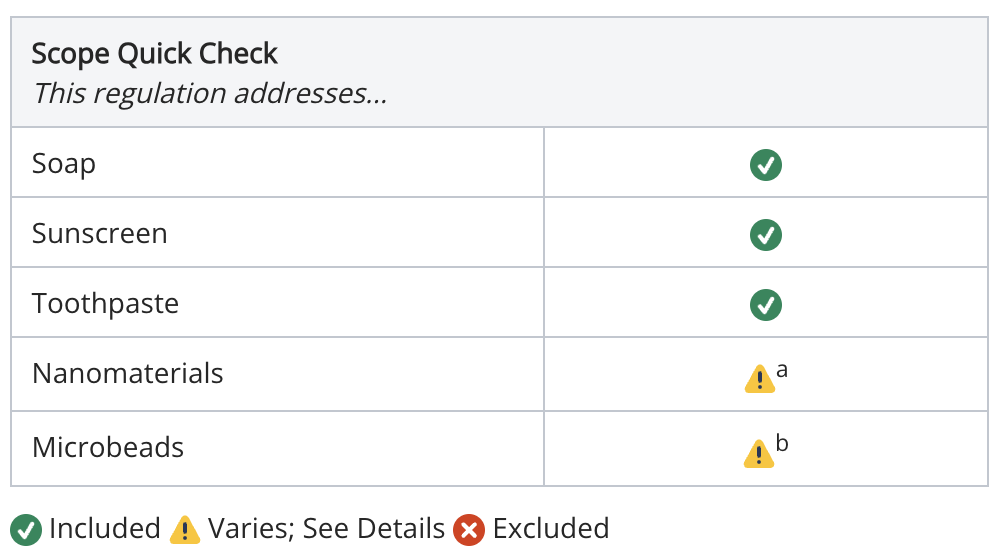
(a) Not directly addressed in regulations but a number of nanomaterials are restricted in Appendix IV - Substances authorized to be used as UV-filters.
(b) Not directly addressed in regulations but regulated in Appendix V - Substances that are prohibited from being used as ingredients. Plastic microbeads (solid particles less than or equal to 5mm used as an exfoliant or for body cleansing) are prohibited in rinse-off preparations.
Indonesia's National Agency of Food and Drug Control (BPOM) issued BPOM Regulation No.21 of 2022 Concerning Procedures for Submitting Cosmetic Notification on October 5, 2022 that provides the criteria for businesses to receive licenses for the distribution of cosmetic products. The regulation is enacted to ensure that cosmetic products distributed in the country fulfill the criteria of safety, quality, design, and purpose.
Applicants can apply for the notification on the website of BPOM.
Prior to submitting the notification application, applicants should first register with BPOM through their website. Once an application has been submitted, the applicant will receive a user ID and password via email to apply for the notification. They will also receive an electronic payment order. Payment must be made within seven days of the order being received.
Required Supporting Documents
The application for notification shall include the following mandatory documents.
For manufacturers:
Business identification number (NIB);
Identity of the company’s management;
Taxpayer identification number;
A copy of the licensing agreement between the trademark owner and the applicant, if applicable;
Certificate for Good Manufacturing Practice (GMP) for cosmetic products with remaining validation for at least 6 months;
A letter stating that if the Notification number has been registered, the applicant will not object if their application number is cancelled by the BPOM;
A letter stating the management team has not been previously involved in criminal activities within Indonesia’s cosmetics sector;
Recommendation letter issued by the Head of UPT (Technical Implementation Unit) within BPOM.
For individual or corporate cosmetic businesses that have production contracts with manufacturers in Indonesia:
Business identification number (NIB);
Identity of the company’s management;
Taxpayer identification number;
Business license;
A letter stating the management team has not been previously involved in criminal activities within Indonesia’s cosmetics sector;
A copy of the licensing agreement between the trademark owner and the applicant, if applicable;
A letter stating that if the Notification number has been registered, the applicant will not object if their application number is cancelled by the BPOM;
Trademark certificates (if applicable);
Recommendation letter from the Head of UPT BPOM;
Copy of the agreement between the applicant and cosmetics manufacturer that possess a GMP certificate with remaining validation for at least 6 months.
For importers:
Business identification number (NIB);
Identity of the company’s management;
Business license;
Taxpayer identification number;
A letter stating the management team has not been previously involved in criminal activities within Indonesia’s cosmetics sector;
Recommendation letter from the Head of UPT BPOM;
Copy of the agreement between the importer and the overseas manufacturer (that is GMP certified) that is legalized by a notary;
A Free of Sale Certificate for cosmetics imported from outside of ASEAN;
Copy of the agreement between the applicant and an ASEAN cosmetics manufacturer that possess a GMP certificate.
Fee
The applicant will receive an electronic payment order. Payment must be made within seven days of the order being received. The fee applies to each cosmetic product that a company wants to notify and depends on the origin of the product.
Cosmetics produced in non-ASEAN country: Indonesian rupiah (IDR) 1,500,000
Cosmetics produced in ASEAN country: IDR 500,000
The fees are non-refundable even if the BPOM denies the application of notification.
Once the payment is processed through the electronic payment system, a product ID number is issued automatically. The applicant receives notification verification within 14 working days from the issuance of the product ID number (3 working days for perfume products). The cosmetic product must be imported within 6 months of receiving the notification verification.
The Notification is valid for 3 years. The application for the notification renewal shall be filed no later than 30 calendar days before the notification expires.
Cosmetics whose notification has expired are prohibited from being produced, imported, or circulated in Indonesia. In the event that the notification has expired, the cosmetics that have been circulated can be circulated for a maximum of 6 months since the notification becomes invalid under the following circumstances:
Still in the process of submitting a notification renewal,
Still in the process of submitting a new notification, or
Has received a new notification
Changes in Notification
Notification of changes must be made if changes are made to:
Name of the industry/importer/business entity that carries out notification without changing the rights to circulate or ownership status;
Address of the industry/importer/business entity that carries out notification without changing the rights to circulate or ownership status;
Size and type of packaging.
For other changes, the industry/importer/business entity submit a new application for notification.
¶ Product information file (Dokumen Informasi Produk, DIP)
For each notified product, a Product Information File (Dokumen Informasi Produk, DIP) shall be prepared by the notification applicant before the cosmetic product is notified and shall be provided upon BPOM's request during an audit. DIP contains data regarding the quality, safety, and benefits of the cosmetic product. It should be retained for at least 1 year after the expiration date of the last manufactured or imported cosmetic product and must be updated when there are changes. It can be written in Indonesian and/or English, and can be in the form of electronic and/or written documents (hard-copy).
DIP audit consists of Routine DIP Audits and Special DIP Audits. The Routine DIP Audit shall be notified a maximum of 30 days prior to the audit. The Special DIP Audit is conducted as a follow-up to post-market surveillance findings and/or public complaints and is carried out without prior notice.
The DIP consists of 4 parts:
Administrative documents;
Data about quality and safety of cosmetics ingredients;
Data about cosmetic quality;
Data about safety and benefit of cosmetics.
In certain cases, additional data or supporting information may be required to support the DIP (for example: product history/experience, challenge tests for microbes, additional analytical methods for confirmation, and production records).
Details about the required DIP contents can be found in BPOM Regulation No. 17 of 2023 concerning Cosmetic Product Information Document Guidelines.
The cosmetic's label and packaging must include the following information:
Cosmetic name
Product functions
Application method
Composition
Country of the manufacturer
Name and complete address of the notification applicant
Batch number
Size, content or net weight
Expiration date
Notification number
2D barcode
Warnings/attention and other information, if required
The following information must be written in Indonesian language: functions, instructions, and warning/attention and other information if required. Other information listed above may be written in Indonesian language or Latin letters and/or Arabic numerals.
In case cosmetics are packaged in primary and secondary packages, but there are limitations to the size and shape of the primary packaging, then the label of the primary package must contain at least Cosmetics name, Batch number and Size, content or net weight. If cosmetics are only packaged in primary package with limitations on the size and shape of the packaging, the other mandatory information shall be stated on the hanging tag, brochures, or shrink wrap included on cosmetics.
For details, please refer to BPOM Regulation No.18 of 2024 Concerning Cosmetic Labeling, Promotion, and Advertising.
Law No. 33 of 2014 Concerning Halal Product Assurance is enacted to ensure protection and assurance is provided concerning the halalness of the product consumed and used by the people.
Halal Product is a Product that has been declared halal (lawful) according to Islamic sharia. Products are goods and/or services that are related to food, beverage, drug, cosmetic, chemical product, biological product, genetically engineered product, as well as consumer goods that are worn, used, or utilized by the public.
Law No. 33 of 2014 requires halal products that are imported, circulate and traded in the territory of Indonesia must be certified halal. Halal Certificate is the recognition of the halalness of a product that is issued by Halal Product Assurance Organizing Agency (BPJPH) based on the written halal fatwa (edict) that is issued by Indonesian Ulema Council (MUI). The Law was effective 5 years after the law was published, that is, October 18, 2019.
Government Regulation (PP) No. 39 of 2021 Regarding the Implementation of Halal Product Assurance was issued on February 2, 2021, which enforces the implementation of the Halal certification. In order to implement the Halal Product Assurance Law step by step, a grace period to obtain the Halal certification was provided. Cosmetic products were subject to a phased implementation period from October 17, 2021 until October 17, 2026. Government Regulation No. 39 of 2021 was revoked by Government Regulation No. 42 of 2024 concerning the Implementation of Halal Product Assurance. The compliance deadline for cosmetic products remains October 17, 2026.
Non-Halal products must be stated clearly on the packaging with the annotation "Not Halal". Halal certified products must label "Halal" on the outer packaging.
Indonesian Government Regulation No. 74/2001 was enacted on November 26, 2001 to prevent and minimize the risk of hazardous and toxic substances (B3) impacting the living environment or the health of humans and other living creatures. B3 substances are hazardous or toxic substances that can directly or indirectly pollute and/or harm the living environment, or endanger the health and survival of humans and other living creatures due to their nature, concentration, or quantity.
The Regulation controls the manufacture, transport, distribution, storage, use, and disposal of B3 substances. Appendix 1 of the Regulation identifies the permitted B3 substances. Appendix 2 of the Regulation lists the prohibited and restricted B3 substances. The Regulation requires the producer and/or importer of the B3 substance to apply for registration and the importer/exporter to submit import/export notification.
The standard operating procedures for the notification of B3 substances are provided by the Ministry of Environment and Forestry Regulation No. P.36/MENLHK/SETJEN/KUM.1/6/2017 Concerning Procedures for Registration and Notification of Hazardous and Toxic Substances. Appendix III of the Regulation provides the import plan confirmation form, and Appendix IV provides the B3 export notification form.
According to Article 8 of Regulation No. 74/2001, a notification of import is required for the following conditions:
Import of B3 substances for the first time
Import of restricted B3 substances
The notification shall be submitted via letter or email by the authority of the country of export to the B3 Management Directorate, Ministry of Environment and Forestry. The following information is required:
Trade name
Chemical name
CAS number
Identity of the B3 exporter
Identity of the B3 importer
Intended use
Safety Data Sheet (SDS)
Amount of B3 substance
B3 import plan (Appendix III of Regulation No. P.36/MENLHK/SETJEN/KUM.1/6/2017)
The Ministry of Environment and Forestry will respond (approval or refusal) within 30 business days from receipt of the notification. The B3 import approval is valid for one year from the date of issuance.
According to Article 7 of Regulation No. 74/2001, a notification of export should be submitted for export of restricted B3 substances if the destination country requires such a notification. The notification shall be submitted by the applicant to the authority of the exporting country of B3 substances through the Director General. The following information is required:
B3 substance identity
Name and address of the exporter
Trading business permit (SIUP) of the exporter
Tax ID number (NPWP) of the exporter
Identity of the importer
Destination of the recipient country
Intended use
Amount of B3 substance
Safety Data Sheet (SDS)
B3 export notification form (Appendix IV of Regulation No. P.36/MENLHK/SETJEN/KUM.1/6/2017)
The notification of the approval of the B3 Export Notification from the authority of the B3 importing country is delivered by the Director General no later than two working days after receiving the approval from the authority of the B3 importing country.
Exemptions
The substances exempted in this regulation include:
Radioactive substances;
Explosives;
Products from mining;
Oil and gas including their products;
Food and drinks including food additives;
Household health supplies;
Cosmetics;
Pharmaceutical preparations;
Narcotics, psychotropic substances, precursor chemicals and other addictive substances;
Chemical weapons;
Biological weapons.
Sources
Regulation No. 74/2001 Regarding Management of Hazardous and Toxic Substances*
SDSs, labels and written reports are required for manufacturing or repackaging of chemical products. Prior to manufacturing or repackaging chemical products, the written report shall be submitted to the Directorate General of Industrial Development.
The format and reference for the written reports is available through Attachment III of the Regulation of Ministry of Industry No. 23/M-IND/PER/4/2013 regarding Amendment of Regulation of Ministry of Industry No. 87/M-IND/PER/9/2009 regarding Globally Harmonized System (GHS) of Classification and Labelling of Chemicals
The following information shall be included in the written report:
Regulation No. 87/M-IND/PER/9/2009 Regarding Globally Harmonized System of Classification and Labelling of Chemicals*
Regulation No. 23/M-IND/PER/4/2013 Regarding amendment of Ministry of Industry No. 87/M-IND/ PER/9/2009 regarding Globally Harmonized System of Classification and Labelling of Chemicals*
Indonesia ratified the Montreal Protocol on June 26, 1992 and acceded to London Amendment on June 26, 1992 as well as Copenhagen Amendment on December 10, 1998. The Ministry of Environment and Forestry is the main authority in the implementation of phasing out Ozone Depleting Substances (ODS).
It coordinates with the Electronic Association and the Association of the Air-Conditioner to limit the emissions of ODS refrigerants used in the installation of refrigeration or air-conditioning equipment. The production, import, sale and export of ODS is controlled by the Ministry of Industry and Ministry of Trade. The total quota for Chlorofluorocarbons (CFCs) and Halons importation is decided annually and a permit issued by the Ministry of Industry. The relevant information is also provided by the trade organizations and customs statistics on a voluntary basis, to facilitate the monitoring of ODS by the Ministry of Trade. Last but not least, Ministry of Agriculture is the main responsible agency that designs strategies to limit the use or emission of Methyl bromide.
Regulations 33/M-IND/PER/4/2007 Regarding Prohibition on Production of Ozone Depleting Substances (BPO) and Goods Using Ozone Depleting Substances (BPO)
Regulations 33/M-IND/PER/4/2007 Regarding Prohibition on Production of Ozone Depleting Substances (BPO) and Goods Using Ozone Depleting Substances (BPO) was enacted to phase out the use of ODS (or known as BPO in the regulations) by the stipulated deadlines. ODS are prohibited from the production and the use in the indoor air-conditioning equipment, motor vehicles, household refrigerators and fire extinguishers. ODS are allowed to be used for the production of foams, refrigerators and aerosols until June 30, 2008. Only the use of ODS for the maintenance of goods is allowed after July 1, 2008. CFCs and Halons shall be recycled and the end products are only allowed for the maintenance of goods which still require CFCs and Halons to work.
Sources
Regulations 33/M-IND/PER/4/2007 Regarding Prohibition on Production of Ozone Depleting Substances (BPO) and Goods Using Ozone Depleting Substances (BPO)*
Stockholm Convention was ratified in Indonesia on September 28, 2009 and enforced on December 27, 2009. A National Implementation Plan was implemented following the ratification, aiming to eliminate the Persistent Organic Pollutants (POPs) by involving all stakeholders.
Multiple agencies are engaged in the initiatives of POPs elimination. Ministry of Environment, serving as the main responsible party, plays an important role on determining the POPs industrial chemicals prohibited from importation or exportation activities, managing POPs by designing several strategies and national policies, and coordinating the implementation of relevant regulations. Ministry of Agriculture takes the responsibility of deciding on POPs pesticides which are banned for import and export. The Center for Registration and Investment and the Pesticide Committee are established under the Ministry of Agriculture to provide advice on technical evaluation upon application for pesticide registration. Besides, Ministry of Health prohibits and monitors POPs that cause adverse impacts to human health, whereas Agency for Drug and Food Control exerts control on harmful POPs found in drugs and foods by establishing Sub-directorate for Product Standardization and Hazardous Materials. The Directorate General for Customs, the Ministry of Home Affairs, The Ministry of Foreign Affairs and other law enforcement units are also involved actively in regulating the use of POPs in the country.
¶ Regulatory Status of POPs Listed under Stockholm Convention
In Indonesia, most of the POPs are regulated as hazardous and poisonous substances (Category B3) under several regulations. They are also prohibited to be used as active ingredients in pesticides. The regulations in place are listed as below:
Indonesia Law No. 19/2009 Regarding Stockholm Convention on Persistent Organic Pollutants Indonesia Law No. 19/2009 Regarding Stockholm Convention on Persistent Organic Pollutants authorizes Stockholm Convention and regulates the POPs listed in the convention.
Indonesia Law No. 32/2009 Regarding the Protection and Management of Environment In Indonesia Law No. 32/2009 Regarding the Protection and Management of Environment, Ministry of Environment is required to manage environment at the central and regional levels. The responsibilities include developing policies, controlling activities that excert social impact, and managing hazardous and toxic materials (Category B3) and wastes.
Government Regulations No. 74/2001 Regarding Management of Hazardous and Toxic Substances Government Regulations No. 74/2001 Regarding Management of Hazardous and Toxic Substances prohibits the use of 10 POPs (regulated as Category B3 substances) in Indonesia.
Indonesia Decree of the Ministry of Agriculture No. 43 of 2019 Regarding Registration of Pesticides Indonesia Decree of the Ministry of Agriculture No. 43 of 2019 Regarding Registration of Pesticides prohibits the use of POPs as active ingredients in pesticides.
The Ministry of Industry Regulation No. 87/M-IND/PER/9/2009 regarding Globally Harmonised System of Classification and Labelling of Chemicals was implemented on September 24, 2009. It was enacted in accordance with GHS Purple Book Revision 2 and later amended in Regulation 04/BIM/PER/1/2014 to the 4th revision.
On April 12, 2013, the Regulation of Ministry of Industry No. 23/M-IND/PER/4/2013 regarding Amendment of Regulation of Ministry of Industry No. 87/M-IND/PER/9/2009 regarding Globally Harmonized System (GHS) of Classification and Labelling of Chemicals was published.
Regulation No. 87/M-IND/PER/9/2009 made GHS mandatory for single substances and voluntary for mixtures. However, according to the amendment Regulation No. 23/M-IND/PER/4/2013, GHS became mandatory for mixtures starting December 31, 2016.
On January 28, 2014, the Regulation No. 04/BIM/PER/1/2014 on Technical Guidance and Supervision Instructions on the Implementation of Globally Harmonized System of Classification and Labelling of Chemicals was published to provide further details on adopting GHS. The classification methods for single substances and mixtures are specified, i.e., testing data, decision logic or Quantitative Structure Activity Relationships for single substances and Bridging Principles, Calculation Method or Additivity Formula, or Cut-off value and concentration limit for the mixtures.
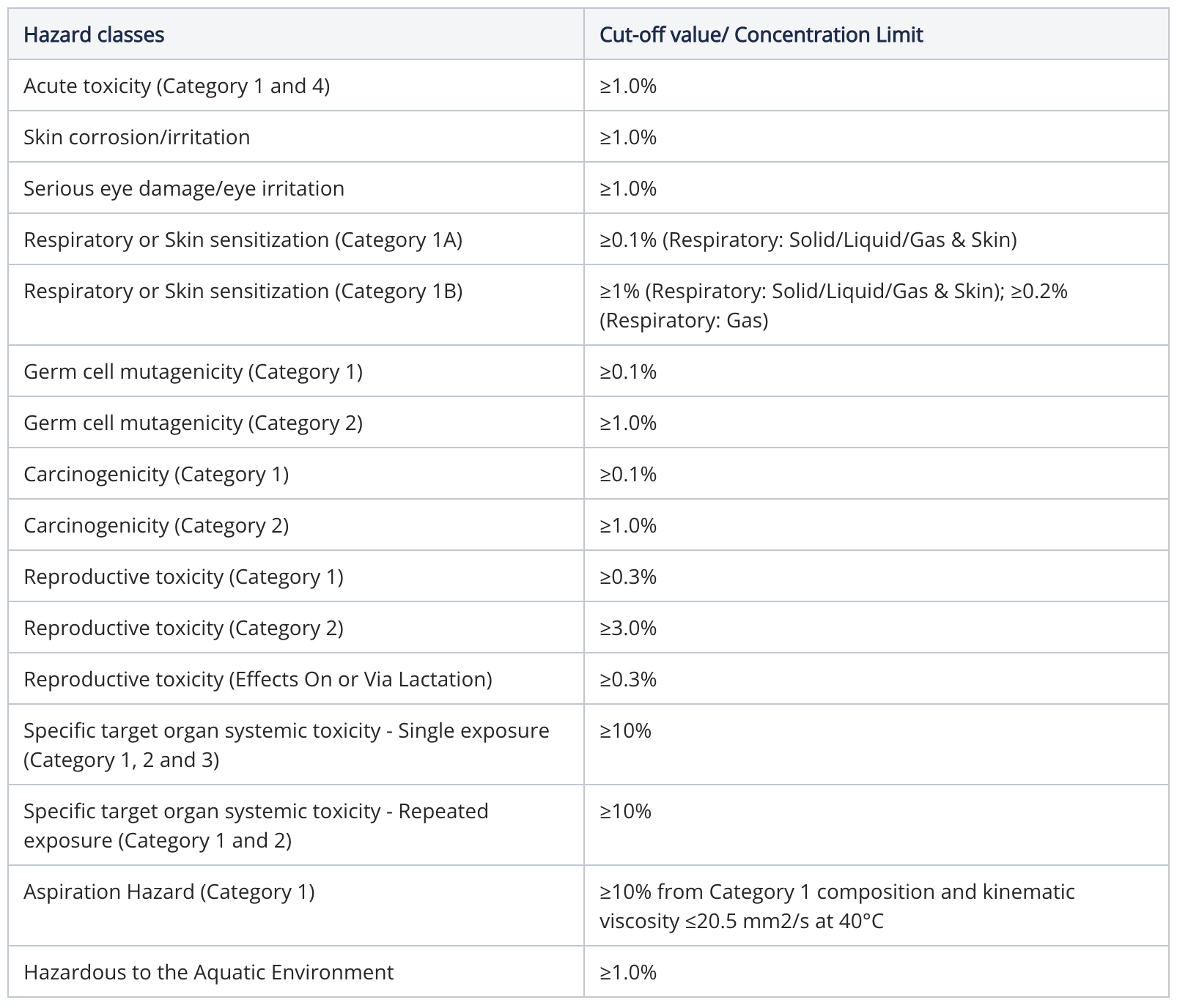
Appendix I, Table 1 of Regulation No. 04/BIM/PER/1/2014 defines the cut-off value/concentration limit for the health and environmental endpoints.
Where test data is not available for a mixture, for health and environmental endpoints, the GHS allows for classification based on the hazards of the substances in the mixture. The GHS usually defines the concentration at which a hazardous substance causes a mixture containing that substance to be classified, for most hazards. These are known as Concentration limits / Cut-off values. Countries must additionally set the thresholds for mixture classification for certain hazards:
Respiratory or Skin Sensitization
Carcinogenicity
Reproductive Toxicity
Specific Target Organ Toxicity - Single Exposure and Repeated Exposure
However, Indonesia has not published these limits.
Appendix II shows the building blocks of GHS in Indonesia. Compared to the 4th revision of the GHS purple book, the following hazard classes are not included in Indonesian GHS:
Aerosols - Category 3
Flammable Liquids - Category 4
Self-reactive Substances and Mixtures - Type C and D
Self-reactive Substances and Mixtures - Type E and F
Organic Peroxides - Type C and D
Organic Peroxides - Type E and F
Acute Toxicity - Oral - Category 5
Acute Toxicity - Dermal - Category 5
Acute Toxicity - Inhalation - Category 5
Skin Corrosion/Irritation - Category 3
Aspiration Hazard - Category 2
Hazardous to the Aquatic Environment - Acute - Category 2
Hazardous to the Aquatic Environment - Acute - Category 3
Sources
Regulation 87/M-IND/PER/9/2009 Regarding Globally Harmonized System of Classification and Labelling of Chemicals*
Regulation 23/M-IND/PER/4/2013 Regarding Amendment of Regulation of Ministry of Industry No. 87/M-IND/PER/9/2009 regarding Globally Harmonized System (GHS) of Classification and Labelling of Chemicals*
Regulation 04/BIM/PER/1/2014 on Technical Guidance and Supervision Instructions on the Implementation of Globally Harmonized System of Classification and Labelling of Chemicals (GHS)*
On December 23, 2021, Indonesia introduced two national standards:
SNI 9030-1:2021 Globally harmonized system - Part 1: Chemical hazard classification
SNI 9030-2:2021 Globally harmonized system - Part 2: Safety data sheets and chemical labeling
SNI 9030-1 sets guidelines for classifying chemical hazard of both single and mixture chemicals according to the Globally Harmonized System (GHS) which helps ascertain information related to the physical, health, and environmental hazards of a chemical with the aim of increasing protection to human health and the environment during the life cycle of a chemical.
SNI 9030-2 provides recommendations for the preparation, review and use of Safety Data Sheets (SDS) and chemical labels. This standard is also a guideline for manufacturers and suppliers of chemicals in the preparation of SDSs and labels. However, this standard does not cover SDS and labeling requirements for medicines, food additives, cosmetics, and pesticide residues in food.
These standards are based on GHS Revision 7. It should be noted that whilst these standards are not currently mandatory, they are the latest published guidelines for GHS implementation in Indonesia. These are also the only Indonesian standards which contain a full list of Hazard and Precautionary statements.
Sources
SNI 9030-1:2021 Globally harmonized system - Part 1: Chemical hazard classification*
SNI 9030-2:2021 Globally harmonized system - Part 2: Safety data sheets and chemical labeling*
*Not available in English. These standards can be purchased online.
Safety Data Sheets (SDSs) are required for manufacturing or repackaging of chemical products. SDSs shall be written in Bahasa Indonesian. The revision of SDSs shall be done whenever there are changes or at least once every five years.
In addition to attaching SDSs in re-packaging, the amendment requires the name and address of the re-packager, and the net weight or volume of chemicals in the package to be included.
The required content according to Regulation 04/BIM/PER/1/2014 is translated and summarized here.
Sources
Regulation 87/M-IND/PER/9/2009 Regarding Globally Harmonized System of Classification and Labelling of Chemicals*
Regulation 23/M-IND/PER/4/2013 Regarding Amendment of Regulation of Ministry of Industry No. 87/M-IND/PER/9/2009 regarding Globally Harmonized System (GHS) of Classification and Labelling of Chemicals*
Regulation 04/BIM/PER/1/2014 on Technical Guidance and Supervision Instructions on the Implementation of Globally Harmonized System of Classification and Labelling of Chemicals (GHS)* (click to download)
A label is required for manufacturing or repackaging of chemical products. Labels shall be written in Bahasa Indonesian. The revision of labels shall be done whenever there are changes or at least once every five years.
In addition to attaching labels when re-packaging, the amendment requires the name and address of the re-packager, and the net weight or volume of chemicals in the package to be included.
The following information is required on the label of chemical products:
Identity of chemicals
Hazard pictogram(s)
Signal word
Hazard statement(s)
Precautionary statement(s)
Identity of manufacturer and/or importer
Additional pictures and information may be added on the label, provided it does not conflict with the required label elements.
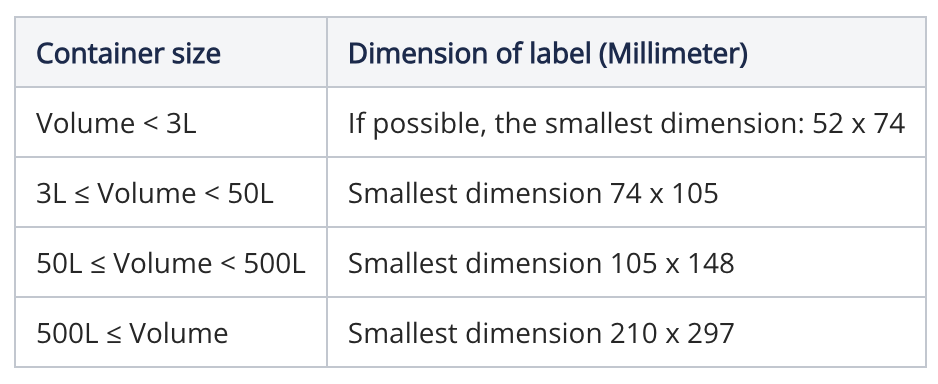
The dimensions of the label shall be based on the container size. The requirements can be found from Appendix IV of regulation 04/BIM/PER/1/2014, as provided below:
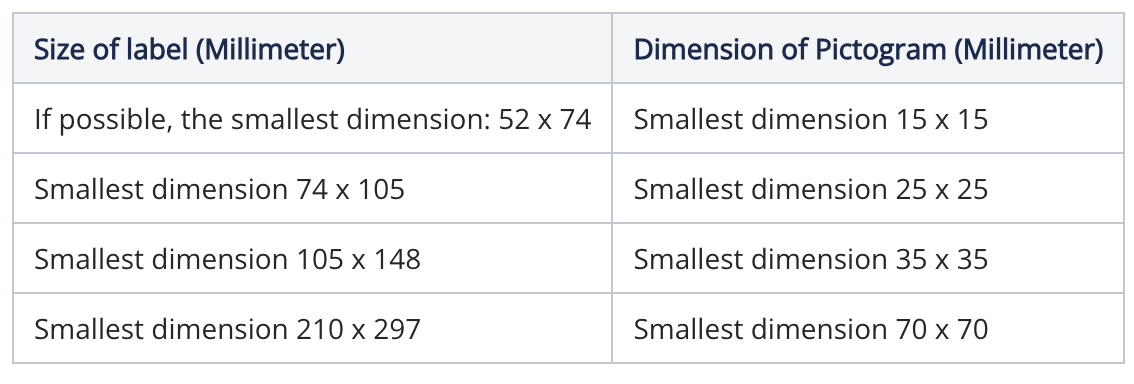
Appendix V of the regulation 04/BIM/PER/1/2014 provides the dimensions of the pictogram with respect to the label size, as shown below:
Regulation 23/M-IND/PER/4/2013 Regarding Amendment of Regulation of Ministry of Industry No. 87/M-IND/PER/9/2009 regarding Globally Harmonized System (GHS) of Classification and Labelling of Chemicals*
Regulation 04/BIM/PER/1/2014 on Technical Guidance and Supervision Instructions on the Implementation of Globally Harmonized System of Classification and Labelling of Chemicals (GHS)*
Prior to GHS implementation in Indonesia, six dangerous substances were already regulated by Regulation No. 24/M-IND/PER/5/2006 regarding Control on Production and Usage of Industrial Dangerous Substances, which was issued on May 9, 2006.
SDSs and labels are required for the import or manufacturing of these substances and a minimum packaging amount is specified in the Regulation. Manufacturers and importers shall use packaging with the size not smaller than the size specified in Attachment II of the Regulation.
Regulation No. 25 of 2021 Concerning Stipulation of Goods Required to Use or Complete with Indonesian Language Labels was published on April 1, 2021. As shown by the name of the Regulation, the label of goods shall be prepared in Indonesian. Arabic numbers or Latin letters may be used on the label if there is no replacement for it.
Appendix of the Regulation list the type of articles controlled by this Regulation.
Sources
Regulation No. 25 of 2021 Concerning Stipulation of Goods Required to Use or Complete with Indonesian Language Labels*
Regulation 87/M-IND/PER/9/2009 established that Confidential Business Information (CBI) can be claimed for chemical names, concentrations and other necessary information. This information shall be disclosed upon request to the Director General of Industrial Development or during an emergency.
Regulation 04/BIM/PER/1/2014 gives more details regarding CBI. According to Article 12 of the regulation, the information that can be protected includes chemical identity, CAS No., and/or generic chemical name. For mixtures or preparations classified as non-hazardous but having additives and/or impurities classified as hazardous with concentration not exceeding the cut-off value and/or concentration limit (as provided in Appendix 1), the chemical identity can be protected in the SDS.
In reference to Indonesian Law No. 30 Year 2000 Regarding Business Confidentiality, a person holding CBI claims can transfer the license for CBI claims to a third party, by reporting to the Directorate General of Intellectual Property Rights.
Regulation No. 87/M-IND/PER/9/2009 Regarding Globally Harmonized System of Classification and Labelling of Chemicals*
Regulation No. 04/BIM/PER/1/2014 on Technical Guidance and Supervision Instructions on the Implementation of Globally Harmonized System of Classification and Labelling of Chemicals (GHS)*
There are two regulations regarding Occupational Exposure Limits (OELs), each regulated under different Ministries:
The Ministry of Manpower and Transmigration is responsible for Regulation of the Ministry of Manpower No. 5 of 2018 Regarding Occupational Safety and Health of the Work Environment issued on April 27, 2018, which replaced Regulation 13/MEN/X/2011 Regarding Threshold Limit Values for Physical and Chemical Factors in the Workplace.
The Ministry of Health is responsible for Regulation of the Ministry of Health No. 70 of 2016 on Environmental Health Standards and Requirements for Industries, which became effective January 20, 2017.
Threshold values are established in Appendix 3 of the Regulation of the Ministry of Manpower No. 5 of 2018 or Table 13 of the Regulation of the Ministry of Health No. 70 of 2016 shall not be exceeded in workplaces.
These regulations co-exist and OELs from either may be used in the case of discrepancies. However, it is highly encouraged to comply with the more recent regulation.
The OELs (including the notations) and biological limit values (including the notations) shall be indicated in Section 8 of SDSs, Exposure Control/Personal Protection, if available.